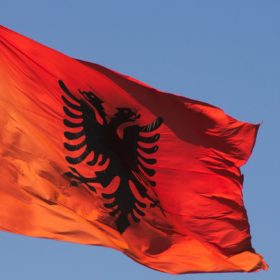
Albania launches 140 MW solar tender
The country’s second large scale solar plant will be built in the Karavasta area, in the centre of the country. Half the energy produced will earn a tariff payment of no more than €55/MWh, the rest will be sold on the energy market.

Armenia aims to improve net metering for small scale solar
The government is being helped by the European Bank for Reconstruction and Development as it designs a new net metering system. The country already supports large scale PV plants and small solar parks.
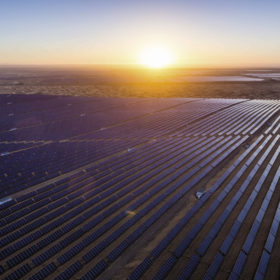
China Huaneng to acquire 294 MW of GCL New Energy projects
The state-owned electric utility is preparing to acquire seven project companies in China, generating $156 million for the developer and removing a further $385 million of liabilities from its books.
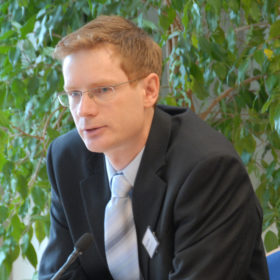
Lead-free soldering in modules: It can be done!
pv magazine’s UP sustainability campaign has investigated the use of lead in PV panels and found, with soldered cell interconnections in particular, viable alternatives are scarce. However, German headquartered manufacturer Opes Solutions has launched a small module for the off-grid market featuring lead-free solder, developed at the request of a customer. We caught up with Opes CEO Robert Händel for a closer look at the module and the challenges and benefits of going lead-free.

Statkraft greens Polish steel with 10-year PPA
The Norwegian hydropower producer has tapped its extensive Polish power purchase agreement portfolio to offer a bankable supply agreement for one of the biggest power consumers in the country.
Breaking news: Zhonghuan Semiconductor up for sale
The body responsible for state-owned assets in the Chinese port city of Tianjin has approved plans to sell all or part of the solar manufacturer to outside investors – although the rumored beneficiary is thought to be partially state-owned itself.
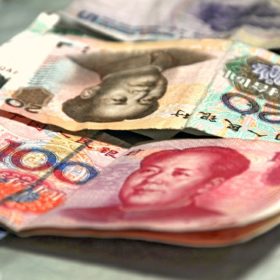
Singyes owner Shuifa to funnel $62m into the business
The construction group, which indirectly owns 67% of the solar developer will pay the funds to complete the $98m sale of two 50 MW solar farms in China to a third-party soon to also be controlled by Shuifa.
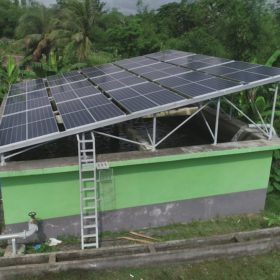
Crop yield rises with solar-powered irrigation
PV systems have helped farmers in the Philippines become less dependent on rain. Projects in Camarines Sur have shown pumping water with solar is not only cheap but can also raise rice yield.

Central Bank of Brazil launches two more solar tenders
Brazil’s biggest lender wants to secure solar power through a leasing arrangement. The central bank expects to buy around 8 GWh of electricity per year for its agencies in the state of Bahia and another 2 GWh in Ceará.

Czechia wants another 1.9 GW of solar by 2030
The raised renewable energy ambition has been dismissed by the domestic solar association, which accuses president Miloš Zeman of wanting to destroy the Czech PV sector. In 2019, the country added only 7 MW of new PV installations.
