
Japan’s NEDO opens fiscal 2025 funding round for solar tech innovation
Japan’s national energy R&D agency has launched a five-year R&D program to accelerate solar innovation. The fiscal 2025 call for proposals seeks advances in high-efficiency cells, site-specific systems, PV module recycling, and long-term power stability.

Who are the solar and wind champions?
In a new monthly column for pv magazine, the International Solar Energy Society (ISES) reveals that Sweden, Australia, Netherlands, Germany and Denmark are the leading countries for per capita solar and wind generation capacity. Furthermore, it explains that global solar capacity has been doubling every 3 years, and wind every 6 years, whereas fossil and nuclear capacity and generation have been almost static in recent years.
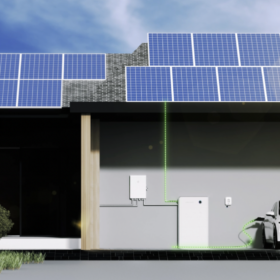
Australian entities say V2G tech ready for market
Essential Energy, the Commonwealth Scientific and Industrial Research Organisation (CSIRO), renewable tech company Sigenergy and electric vehicle distributor AUSEV have jointly announced vehicle-to-grid (V2G) technology is market ready in Australia.
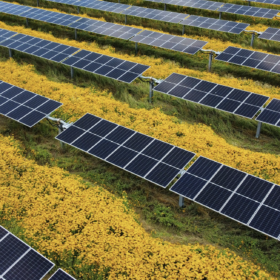
Acoustics for solar harmony
Fixing a project’s acoustics can be costly and difficult, but easily avoided if considered early in the project’s development.
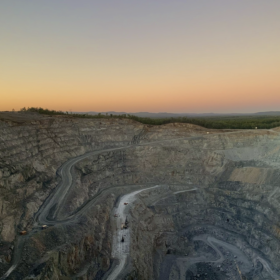
Australian state backs 20 GWh pumped hydro project
The Queensland government in Australia is set to invest AUD 50 million ($31.8 million) into a pumped hydro project with an energy storage capacity of up to 20 GWh as it works to develop a new five-year energy roadmap that is to be delivered by the end of 2025.
India set to hit 30 GW of rooftop PV capacity in fiscal 2027
India’s installed rooftop solar capacity will reach 25 GW to 30 GW by fiscal 2027 from 17 GW in fiscal 2025, according to CareEdge Advisory & Research.
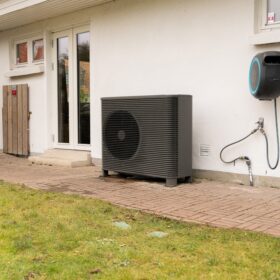
California introduces bill to accelerate heat pump adoption
With California projected to fall two million installations short of its 2030 target, the bill aims to make installing heat pumps and HVAC systems faster and easier.
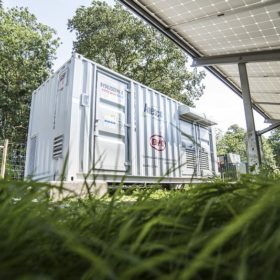
Battery developers race for Dutch grid access as TenneT unlocks 9 GW capacity
Dutch transmission system operator (TSO) TenneT has unlocked over 9 GW of high-voltage grid capacity by introducing flexible contracts for off-peak hours, prompting a surge of interest from battery energy storage developers eager to secure grid access. While these contracts offer notable advantages, Aurora Energy Research says that battery storage projects continue to face challenges due to grid fees, which remain significantly higher than in other European markets.
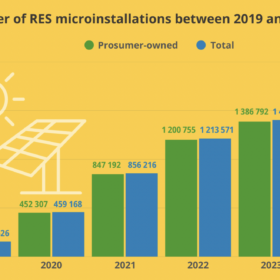
Poland’s micro-solar growth slows slightly in 2024
Poland’s micro-scale solar sector grew to 1.5 million systems and 12.7 GW in 2024, with slower growth in both new installations and energy exports, according to the country’s energy regulator.

Glint Solar unveils software for early-stage BESS projects
The Norwegian PV planning software company has released a new product for prospecting, analysis, and design of battery energy storage system (BESS) projects at the early stage.
