
Beyond first-time installations: How Europe’s residential solar Market is shifting toward upgrades and intelligent energy systems
Europe’s residential solar market is shifting from rapid rooftop PV growth to a more selective phase, with declining new installations but rising demand for upgrades like storage, smart energy management, EV integration, and balcony systems. Rather than retreating, households are reinvesting in complementary technologies that enhance flexibility, reliability, and self-consumption, redefining residential demand around integrated, intelligent energy solutions.

Spain hits 50 GW solar milestone
Spain’s installed solar capacity reached 50 GW in early 2026 after adding about 8.7 GW in 2025, according to grid operator Red Eléctrica de España (REE).

The new rationale of the EU PV Market
In its first monthly column for pv magazine, the Becquerel Institute explains how solar PV continues its global expansion despite political uncertainty and market turbulence. In Europe, 2025 was a record year — but the underlying dynamics are becoming increasingly complex.
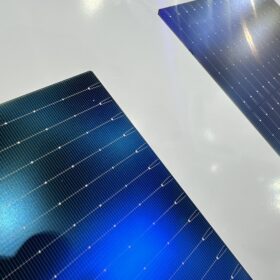
UV testing, solar cell factory inspection now mandatory for Munich Re’s PV warranty insurance
The world’s largest reinsurer has recently introduced stricter requirements for PV warranty insurance to further de-risk insured PV parks and set a higher benchmark for industry wide reliability and production quality.
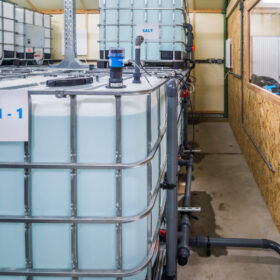
Long-duration storage as an antidote to grid congestion, renewables curtailment
RenewaFLEXNL, a three-year Dutch initiative led by TNO, aims to accelerate long‑duration energy storage (8–100 h) to reduce grid congestion and better integrate renewable energy. pv magazine spoke with the project coordinator, Iraxte Gonzalez Aparicio, about diverse storage technologies, real-world applications, regulatory guidance, and energy management system tools to support large-scale solar‑plus‑storage deployment in the Netherlands and beyond.

Jupiter International doubles solar cell manufacturing capacity to 2 GW in India
Jupiter International Ltd has commissioned a 1 GW mono passivated emitter and rear cell (PERC) solar cell manufacturing facility in India, increasing its total installed capacity to nearly 2 GW from 959 MW.

Agrivoltaics? Yes in my vineyard
Researchers in Spain surveyed 238 wine tourists in the Murcia region and found broad support for trellis-integrated agrivoltaics in vineyards, with 94% backing solar integration and most respondents seeing no landscape conflict.

High-voltage DC design targets AI data center costs
A white paper from Enteligent says an 800V direct current architecture linking solar and storage directly to data centers can cut capital costs, reduce copper use and improve efficiency compared with conventional alternating current systems.
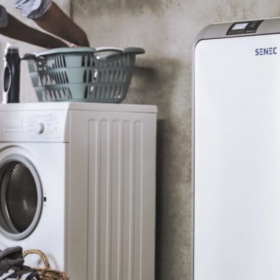
Hungary launches grants for residential battery storage
Hungary has opened applications for a program offering up to HUF 2.5 million ($7,820) per household to support residential battery storage, prioritizing grid-exporting solar users and small rural settlements.
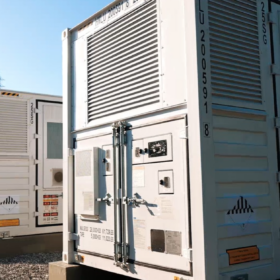
Brazil reserve battery auction rules near finalization with 20 GW lined up
Brazil’s electricity regulator has approved March reserve capacity auctions for thermal and hydro plants with more than 125 GW registered, while guidelines for a separate battery storage auction remain pending even as over 20 GW of projects are under development.
