IEA calls for stronger solar, wind integration measures
The International Energy Agency’s (IEA) latest report warns that failing to support integration at the point of deployment could jeopardize up to 15% of solar and wind projects by 2030. This shortfall would reduce their combined share of the global electricity mix by 5%.

EU approves €1.2 billion renewables grant scheme in Poland
The European Commission has given the green light to a €1.2 billion ($1.3 billion) state aid program in Poland that provides direct grants to companies producing solar panels, batteries, heat pumps, and other renewable equipment components.

Australia has 103 GW of rooftop PV potential, says think tank
A new Climate Council report estimates Australia’s rooftop solar potential at 103 GW – four times the nation’s current installed capacity.
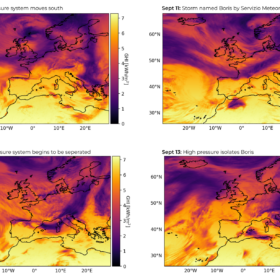
Storm Boris delivers record rain, early snows across Europe
In a new weekly update for pv magazine, Solcast, a DNV company, reports that, as the storm Boris swept across Europe, snow began falling in some regions for the first time this season. The situation is now stabilizing as the system weakens and a high-pressure zone takes hold across the region.
Circular economy and solar photovoltaics: is there a case for second-life PV modules?
What happens to a solar PV module after its expected 25-year operational life? With around 2 TW of rooftop and utility-scale PV already deployed worldwide, and a large number of them being retired before operating for 15 years, the amount of PV modules being discarded is growing every year. As PV modules are becoming cheaper by the day, and with the constant improvement in PV module efficiencies, many utility-scale PV power plants are starting to be repowered even before they reach their expected 25 years of operation. Many of these modules are still performing well. Can they be deployed for a second life to provide solar electricity for a few more years?
Photovoltaic systems are a no-regret investment decision
New research from Germany shows that investing in residential PV remains an optimal choice even when price breaks on electricity and natural gas are applied. The scientists quantified the savings that PV systems achieved between 2019 and 2022, when the COVID-19 crisis and the outburst of the war in Ukraine made prices in the electricity markets extremely volatile.
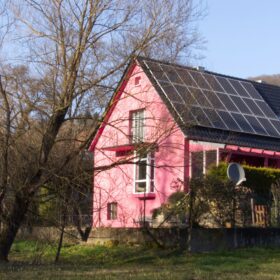
U.S. residential solar prices hovering near all-time low
Average home solar prices are $2.69 per watt, said EnergySage.

Sweden to lower solar subsidy, scrap tax breaks for electricity micro-production
The Swedish government is considering reducing the subsidy for solar installations and removing the income tax reduction for households and businesses that micro-produce renewable electricity. Svensk Solenergi, Sweden’s leading solar association, has criticized the proposals.
Quebec to run 150 MW solar tender before end of year
The government of the Canadian province of Quebec is calling on utility Hydro-Quebec to run two solar tenders totaling 300 MW – one by the end of 2024 and another by the end of 2026. This marks the province’s first call for solar development on a commercial basis.

Hoymiles commissions microinverter factory in Mexico
Hoymiles says it has commissioned a microinverter factory in Monterrey, Mexico, with an initial production capacity of 500,000 units per year.
