
Tata Power begins solar cell production at 4.3 GW plant in India
Tata Power’s TP Solar subsidiary has started commercial production of solar cells with an initial capacity of 2 GW at its 4.3 GW integrated PV cell and module plant in the Indian state of Tamil Nadu.

Draghi says EU cleantech industry doesn’t need simple solutions
Italian economist Mario Draghi says European countries are legitimately using local-content requirements to maintain technological sovereignty. In a new report on the EU cleantech industry, he warns about the risk of following the United States in closing off markets to Chinese technology.

Intersolar South America underscores Brazil’s solar growth, tech innovation
The Intersolar South America trade show drew 650 exhibitors and 55,000 visitors in August, highlighting industry growth with new pavilions on storage and electric mobility. Brazil is on track to reach 47.2 GW of installed solar capacity by the end of this year, with 11 GW of new PV capacity additions, according to Brazilian PV association ABsolar.

Ecostal Group acquires Solexis
Ecostal Group, a B2B solar specialist, has acquired Swiss PV equipment distributor Solexis. The group says the merger will expand its operations in Switzerland.
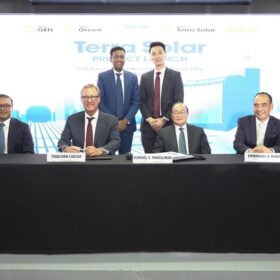
Actis invests in 3.5 GW/4.5 GWh of solar-plus-storage in Philippines
Private equity investor Actis has become a strategic partner in a 3.5 GW/4.5 GWh solar-plus-storage project in the Philippines. The project is poised to become the world’s largest integrated renewables and energy storage installation upon completion. Actis is investing $600 million for a 40% equity stake.

India proposes ALMM mandate for solar cells from April
India’s Ministry of New and Renewable Energy (MNRE) has started accepting feedback on draft guidelines for the Approved List of Models and Manufacturers (ALMM) for solar cells. The MNRE plans to implement the guidelines from April 2026.

Bolivia picks companies from China, Italy, France, Australia for lithium projects
The Bolivian National Strategic Public Company for Lithium Deposits (YLB) says it has selected companies from China, Italy, France, and Australia to negotiate lithium exploitation projects and evaluate their mineral processing proposals.
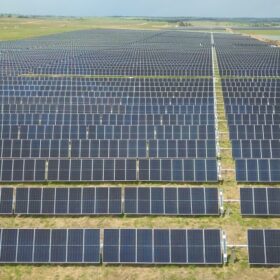
Australian authorities approve 600 MW/1,200 MWh of solar-plus-storage
The Australian federal government has approved a 600 MW/1,200 MWh solar farm and battery energy storage system in the state of New South Wales.
France records 233 hours of negative electricity prices in H1
KiloWattSol, an independent solar consultancy, says there were 308 hours of negative electricity prices from the start of 2024 to Aug. 23 – more than double the 147 negative hours recorded in 2023.
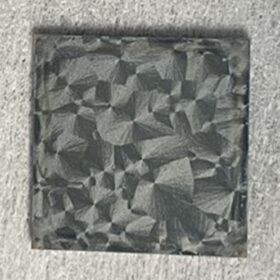
Terpyridine-passivated perovskite solar cells achieve 25.24% efficiency
An international team of researchers demonstrated perovskite solar cells treated with a molecular passivator based on π-conjugated terpyridine Lewis-base molecules that achieved 25.24% power conversion efficiency, with 90% retained after 2,664 hours of light exposure. The treatment reportedly works at high concentrations without damaging the perovskite film or diminishing cell performance. A protocol was published to reproduce the results, opening the door to testing it on a range of perovskite absorbers.
