
China could lead the world to net zero
China, with an 18% share of the global population, uses 26% of the world’s primary energy and emits 33% of the world’s energy-related CO2. The energy transition unfolding in the country isn’t merely a national affair as its ramifications echo globally, explains Mahnaz Hadizadeh, a researcher for consultancy DNV.

Bolivian president ties coup attempt to nation’s lithium interests
Bolivian soldiers sparked controversy last week by questioning President Luis Arce, prompting allies of the ruling party, including former President Evo Morales, to describe the incident as a “self-coup.” However, Arce has blamed the the situation on entities interested in exploiting Bolivia’s lithium reserves.

South Africa imposes 10% import tariff on solar panels
The International Trade Administration Commission of South Africa (ITAC) has imposed a 10% import tariff on solar panels to protect local manufacturers, attract investment, and deepen the value chain. The South African Photovoltaic Industry Association has questioned the lack of formal industry engagement, calling the timing “not ideal.”

Colombia’s PV capacity hits 1.2 GW
Colombia’s Mining and Energy Planning Unit (UPME) says the country’s PV capacity has reached 1,193 MW. The nation surpassed the 1 GW threshold several weeks ago with the commissioning of two large-scale solar facilities.
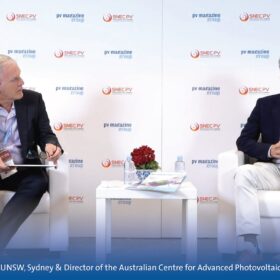
Imminent introduction of perovskite-silicon tandems is unlikely, says Prof. Martin Green
At SNEC 2024 in Shanghai, pv magazine spoke with Martin Green, Scientia Professor at the University of New South Wales and solar cell technology expert. He said perovskite-silicon tandem technologies still have a long way to go before reaching commercial maturity and predicts silicon-based technologies will still dominate the market for many years. He also sees potential for copper zinc tin sulfide (CZTS) solar cells and other absorber materials. “Until we don’t solve the stability issues with perovskite, is good to have other candidates,” he stated.
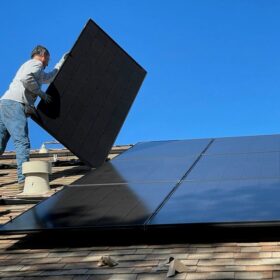
Canada’s B.C. Hydro to offer solar, battery rebates
Homeowners in the Canadian province of British Columbia who install rooftop solar and battery energy storage systems will soon be able to apply for up to CAD 10,000 ($7,341) in rebates from electric utility B.C. Hydro.
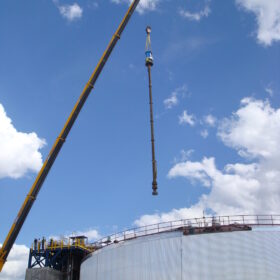
Sulzer supplies molten salt pumps for 100 MW solar tower in China
Sulzer, a Switzerland-based fluid engineering specialist, has supplied molten salt pumps for a 100 MW concentrated solar power (CSP) project in China. The facility is designed to provide solar power 24 hours a day.
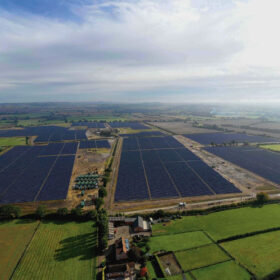
United Kingdom breaks 16 GW barrier for solar deployment
Revised figures reveal UK solar capacity surpassed 16 GW in 2023, thanks to the inclusion of the newly available distribution network operator (DNO). Provisional figures for the first quarter of 2024 show the pace of new capacity lagging the same period in 2023.

Maldives opens tender for grid-tied solar-plus-diesel plants
The government of the Maldives is accepting bids for the design, supply and installation of grid-tied solar-diesel hybrid power generation plants. The projects will be built on nine inhabited islands across the country.
Australian state prioritizes pumped hydro projects
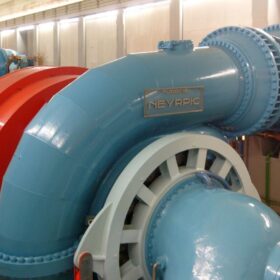
Three pumped hydro projects that would deliver a combined 1,035 MW/9,480 MWh of dispatchable capacity are among six projects that have been declared critical, state-significant infrastructure by the New South Wales government in Australia.
