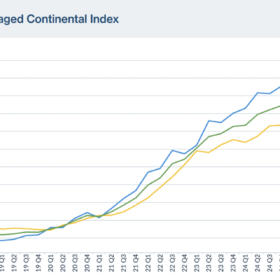
LevelTen warns of rising PPA prices amid US trade, policy strain
Power purchase agreement (PPA) prices for solar projects in North America rose 4% in the third quarter of 2025, with LevelTen Energy warning that tariffs and policy uncertainty could push costs even higher.
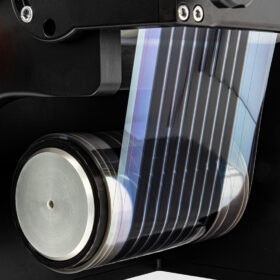
Market trust key for perovskite solar commercialization
In a new perspective paper, researchers from Dresden University of Technology and Denmark’s InfinityPV analyzed scientific research and more than 100 companies involved in organic PV and perovskite solar cell manufacturing. Their findings show that the commercialization of these technologies depends on the PV industry’s ability to increase financial transparency.

Global PV outlook clouded by policy shifts and China export risks
The global PV market faces uncertainty amid fluctuating module prices and evolving energy policies. Changes to Chinese export taxes may further raise module costs, affecting European and Asian markets.
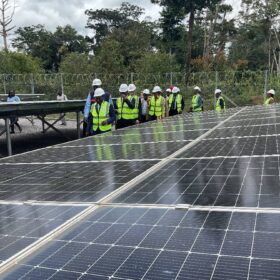
Cameroon, Zambia electrify villages with solar
Cameroon and Zambia are implementing government programs that bring solar minigrids to communities without stable electricity access. Cameroon recently switched on two solar installations to power two villages, while Zambia inaugurated four solar minigrids in the country’s central province.

German railway areas have 37.6 GW of solar potential
Fraunhofer Institute for Solar Energy Systems (ISE) says PV systems within 2 km of Germany’s railway substations could generate more than four times the network’s annual power demand.

Negative pricing reshapes solar finance as investors turn to storage for flexibility in Europe
Growing price volatility and the rise of negative pricing across power markets are pushing lenders and developers to rethink risk and revenue structures, focusing on asset flexibility and sustainable business models for storage, including co-location.
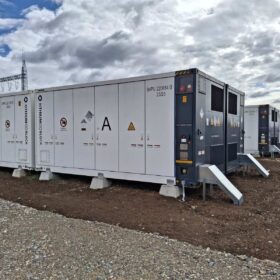
Renalfa switches on 260 MWh battery storage system in Bulgaria
The battery energy storage system is the first phase of a 315 MW/760 MWh system that is being developed alongside 238 MW of solar under Bulgaria’s largest hybrid power project to date, due for completion next year.
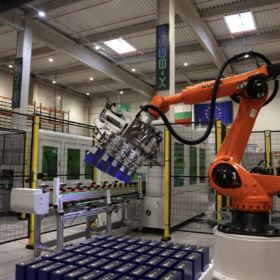
IPS inaugurates Bulgaria’s first battery storage gigafactory
International Power Supply (IPS) has begun production at its 3 GWh battery factory near Sofia, with plans to expand capacity to 5 GWh by the second quarter of 2026.
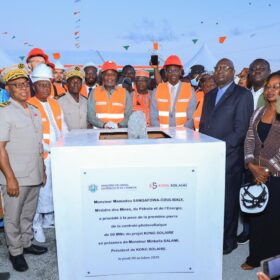
Ivory Coast breaks ground on 50 MW solar project
The 50 MW Kong solar project, being built in the north of the country, is scheduled for commissioning in 2027. It is part of wider plans to have over 1 GW of installed solar by the end of the decade.

India installs record 29.5 GW of solar in first nine months of 2025
India’s solar additions surged 70% year on year to 29.5 GW in the first three quarters of 2025, driven by rapid utility-scale and rooftop deployment, according to JMK Research.
