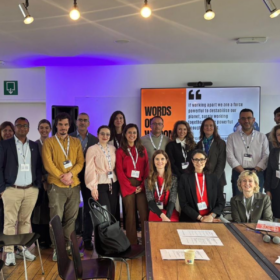
Human-centered leadership in the age of AI: Why psychological safety and inclusive leadership matter for energy security
Women in Solar+ Europe (WiSEu Network) analyzes how psychological safety, inclusive leadership, and bias awareness influence decision-making, innovation, and energy security after hosting a workshop during the SolarPower Summit this week. Through interactive discussions and real-life scenarios, participants reflected on the growing importance of human judgment, trust, and collaboration in an AI-driven industry, highlighting that resilient energy systems are ultimately built not only through technology, but also through people and leadership.

Chinese PV Industry Brief: JinkoSolar, Longi, Trina Solar, JA Solar post Q1 losses
China’s leading solar manufacturers all reported first-quarter net losses, despite improving margins and continued high shipment volumes across the sector.
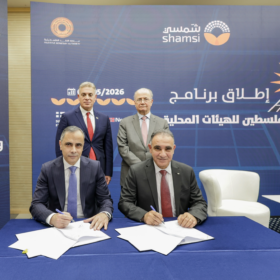
Palestine launches program for local authority solar projects
A program designed to finance solar projects for local authorities in Palestine has opened with an initial $25 million investment from the Palestine Monetary Authority in collaboration with Austria, Finland and Norway.
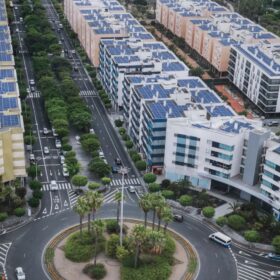
Spain accelerates rollout of energy communities
Spain has expanded its energy community programme with 20 new projects, bringing the national total to 262 and unlocking €108.4 million in EU-backed funding. Unevenly distributed across regions, the energy communities deployed in Spain to date combine solar generation, storage, efficiency, and mobility solutions, delivering 175.3 MW of PV capacity and involving more than 111,000 citizens.
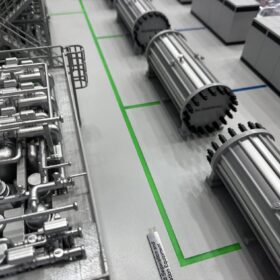
Germany risks €45 billion taxpayer hit on hydrogen overbuild, warns IEEFA
Germany risks leaving taxpayers liable for at least €34.7 billion ($40.8 billion) in unrecovered hydrogen infrastructure costs by 2055, the Institute for Energy Economics and Financial Analysis (IEEFA) says in a new report, putting the true regulated cost base at approaching €50 billion against the commonly cited €19.8 billion construction figure.

Czechia considers stop to double taxation on solar, storage projects
The Czech government is reviewing proposals to streamline procedures for new solar power plants, including increasing the threshold for paying electricity tax to 100 kW and preventing double taxation on projects installing both solar and storage.

Bhutan tenders solar projects for healthcare facilities
Bhutan has kicked off a tender to develop 12.1 MW of rooftop solar across 73 public healthcare facilities in the country. The initial deadline to submit expressions of interest is May 29.
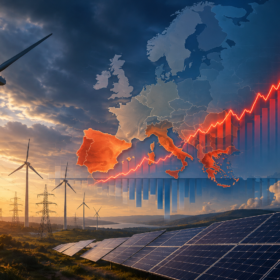
Europe’s negative electricity price hours double in Q1 amid renewables surpluses, market imbalances
UK-based consultancy Ricardo, part of the WSP Group, reports that EU-27 day-ahead power markets saw 1,223 negative-price hours in Q1 2026, more than double Q1 2025, driven mainly by Spain, Portugal, and Greece, while Nordic markets fell back to zero after prior spikes. Germany’s April 2026 data shows negative prices aligning with large renewable forecast errors and likely curtailment during oversupply periods.
Meta, Amazon and J&J power Perigus Energy’s European CPPA portfolio
Perigus Energy has named Meta, Amazon, Johnson & Johnson, Flogas, and SWW Wunsiedel as corporate power offtakers, confirming that 204.85 MW – just more than 35% of its 578 MW operational portfolio – is contracted through corporate power purchase agreements (PPAs).
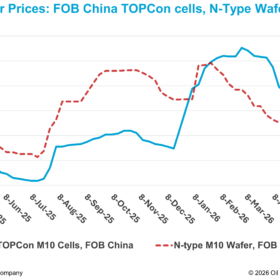
China TOPCon solar cell prices stabilize as holiday lull slows trading
In a new weekly update for pv magazine, OPIS, a Dow Jones company, provides a quick look at the main price trends in the global PV industry.
