
EU approves €1.2 billion renewables grant scheme in Poland
The European Commission has given the green light to a €1.2 billion ($1.3 billion) state aid program in Poland that provides direct grants to companies producing solar panels, batteries, heat pumps, and other renewable equipment components.
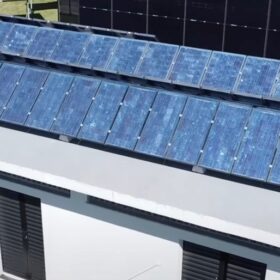
Circular economy and solar photovoltaics: is there a case for second-life PV modules?
What happens to a solar PV module after its expected 25-year operational life? With around 2 TW of rooftop and utility-scale PV already deployed worldwide, and a large number of them being retired before operating for 15 years, the amount of PV modules being discarded is growing every year. As PV modules are becoming cheaper by the day, and with the constant improvement in PV module efficiencies, many utility-scale PV power plants are starting to be repowered even before they reach their expected 25 years of operation. Many of these modules are still performing well. Can they be deployed for a second life to provide solar electricity for a few more years?
Sweden to lower solar subsidy, scrap tax breaks for electricity micro-production
The Swedish government is considering reducing the subsidy for solar installations and removing the income tax reduction for households and businesses that micro-produce renewable electricity. Svensk Solenergi, Sweden’s leading solar association, has criticized the proposals.
Quebec to run 150 MW solar tender before end of year
The government of the Canadian province of Quebec is calling on utility Hydro-Quebec to run two solar tenders totaling 300 MW – one by the end of 2024 and another by the end of 2026. This marks the province’s first call for solar development on a commercial basis.

World now has five times more PV than nuclear power
Authors of the World Nuclear Industry Status Report 2024 the world had 408 operational reactors producing 367 GW in the middle of the year, which is significantly less than installed capacity predictions for solar by the end of the year and five time less the world’s cumulative PV capacity, which is now approaching 2 TW.

Ontario plans large-scale, competitive energy procurement
The government of the Canadian province of Ontario has directed the Independent Electricity System Operator (IESO) to finalize a design framework for a large-scale energy procurement exercise, which will include solar. It says that ground-mounted solar installations will be prohibited in prime agricultural areas.
Greek PV group urges halt to large-scale solar licenses amid curtailment
The Hellenic Association of Photovoltaic Energy Producers (Spef) is pushing the Greek government to stop issuing new grid connection licenses for renewable energy systems to address the nation’s escalating power curtailment issue.
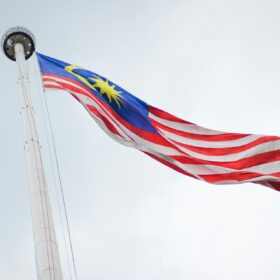
Malaysia reaches 350 MW residential solar quota for net metering
Malaysia’s Sustainable Energy Development Authority reports that the 350 MW capacity allocated for residential solar under the net metering initiative has been reached. However, capacity remains available for government buildings, as well as commercial and industrial users under the same scheme.

Hungary’s residential PV subsidy scheme draws 20,000 applicants
The Hungarian government says 20,000 households have signed up for its PV subsidies scheme, which offers up to HUF 5 million ($14,125) per home installation. The original HUF 75.8 billion budget was increased by HUF 30 billion in July.

China urges US to reverse new tariffs on solar, batteries, EVs
China’s Ministry of Commerce has described the Office of the US Trade Representative’s recent decision to raise tariffs on Chinese solar components, batteries, semiconductors, steel, and EVs as “typical unilateralism and protectionism.” It added that the tariff increases will harm US companies and consumers.
