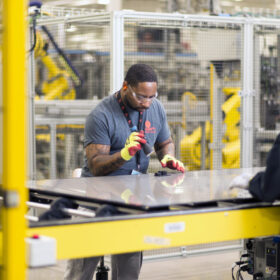
Bill aims to cut 45X tax credits for Chinese solar makers in the U.S.
While the lucrative tax credits has attracted clean energy manufacturers from around the world to build factories in the U.S., the fact that many of the new manufacturing facilities are from Chinese companies has created a controversy that this new bill aims to solve.

Portugal allocates funding for 500 MW of energy storage
The Portuguese Ministry of Energy has allocated €99.75 million ($107.6 million) for grid flexibility and energy storage projects which should be installed by the end of 2025.

UK government earmarks GBP1.5 billion for contracts for difference pot
The UK government has increased the budget for its sixth Contracts for Difference (CfD) auction by half. Extra allocation includes millions of pounds for technologies such as solar and onshore wind, but offshore wind enjoys the lion’s share of the budget.

Spain unveils €2.3 billion support program for hydrogen development, renewable energy sectors
The country’s ecological transition ministry has published the regulatory bases of aid to large hydrogen clusters, industrial capacities in solar, wind energy, heat pumps, batteries and electrolysers; innovative renewable energy, storage and heat pump projects; and energy communities.
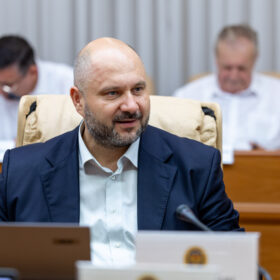
Moldova sets new approval process for power plants above 20 MW
Moldova’s Energy Minister, Victor Parlicov, says the new regulation will facilitate the authorization of renewable energy capacities, in particular those on the free market and without a support scheme, while also providing predictability for investors.
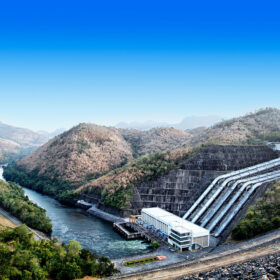
Tender kicks off for hydro-floating solar hybrid in Thailand
Thailand’s Electricity Generating Authority has opened a tender for the design, supply, construction and commissioning of a floating solar array to be built at a dam with an existing hydroelectric power station.

EU launches second cross-border solar, wind tender
A call for the EU’s second cross-border renewables tender has gone out and will remain open until March 4, 2025. Luxembourg is providing €52.4 million ($56.7 million), while Finland and Estonia have committed to installing solar and onshore wind on their territories.

Battery storage on a capacity market
In Germany – but not only there – there is a heated debate about the pros and cons of a capacity market. The German Renewable Energy Association is against it, and recently the German New Energy Industry Association, the DIHK and the EEX energy exchange have also taken a clear stance: Germany does not need a “power plant subsidy program.” In this article, four experts explain why battery storage can also play an important role in a capacity market and make recommendations on how the design of the market can help avoid mismanagement, wrong incentives and unnecessary costs.

Smart buildings key to overcoming rooftop PV hurdles
In its latest monthly column for pv magazine, SolarPower Europe explains how several European countries are moving away from support schemes for injections and towards the adoption of time-variant supply tariffs, which play a crucial role in reducing daily price fluctuations. This shift challenges the traditional business case for rooftop PV, which often relies on maximizing grid injections.
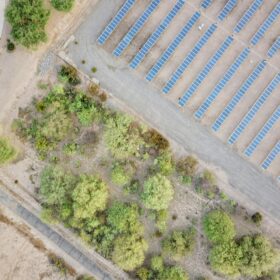
Investor concerns remain in Australia as renewable energy project pipeline grows
Growth in Australia’s renewable energy sector is strong with 43 GW of new utility scale generation and storage projects working through the National Electricity Market connection process but concerns remain that uncertainties surrounding approval processes could impact investor confidence.
