
Ireland allocates almost 960 MW of solar in fourth renewables auction
This year’s auction saw the Irish government provisionally allocate 959.85 MW of solar across 23 projects. The final average price for PV was €0.10476 ($0.12)/kWh.

Draghi says EU cleantech industry doesn’t need simple solutions
Italian economist Mario Draghi says European countries are legitimately using local-content requirements to maintain technological sovereignty. In a new report on the EU cleantech industry, he warns about the risk of following the United States in closing off markets to Chinese technology.

India proposes ALMM mandate for solar cells from April
India’s Ministry of New and Renewable Energy (MNRE) has started accepting feedback on draft guidelines for the Approved List of Models and Manufacturers (ALMM) for solar cells. The MNRE plans to implement the guidelines from April 2026.

Taking a stand for the climate
Stanford University professor Mark Z. Jacobson spoke to pv magazine about testifying in support of young US climate activists and revealed which technologies he thinks will be most useful for the energy transition.

‘Innovation can be deterred by cognitive biases’
This week, Women in Solar Europe (WiSEu) gives voice to Filipa Monteiro Martins, Renewables Innovation Unit Manager at Portuguese energy company Galp. She says that inclusion is a critical driver of long-term business success and innovation, especially in the renewable energy industry, where the ability to adapt and evolve is key.

South Korea records 1.2 GW of solar in H1
South Korea installed 1.2 GW of solar in the first half of 2024, according to the Korea Energy Agency. It says the nation will deploy between 2.7 GW and 2.8 GW of PV capacity this year, continuing the market’s decline since its 2020 peak.
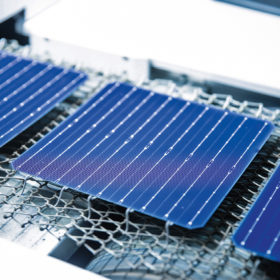
Chinese PV leaders ask Beijing for new tender pricing mechanisms
Chinese PV industry leaders are urging Beijing to implement requirements to help manufacturers operate more sustainably, as solar module prices hit record lows in China’s large-scale PV tenders.

Ready for anything
Worldwide, solar has an important part to play in preventing climate breakdown and reducing the frequency of extreme weather events. But the regions most vulnerable to these conditions face their own challenges in building resilient energy systems. The right approach to renewable energy development can reap multiple benefits in these regions, as pv magazine heard when it spoke to Kamal Kishore, Special Representative for the United Nations Office for Disaster Risk Reduction (UNDRR).

Poland relaunches residential solar, storage rebate scheme
The sixth edition of the Polish government’s residential solar and storage rebate scheme is now open, with a total budget of PLN 400 million ($103.2 million). Applications will be accepted until Dec. 20, or until funds are exhausted.
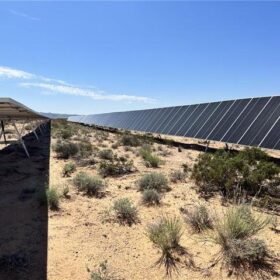
U.S. authorities unveil plan to develop solar on 31 million acres
The U.S. Bureau of Land Management (BLM) said the plan intentionally drives development closer to transmission lines or on previously disturbed lands to avoid protected lands, sensitive cultural resources and important wildlife habitat.
