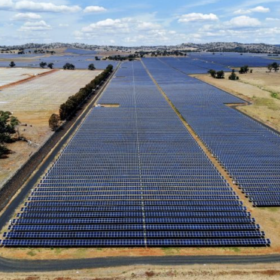
Australian solar generation soars 21% in 2022-23 period
The Australian government’s Energy Update 2024 shows that solar generation grew 21% in the 2022-23 period and is 11 times higher than a decade ago, jumping 3% in each of the past two years.
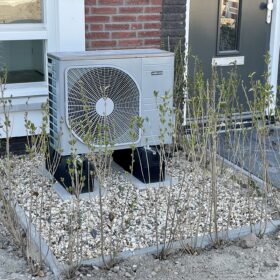
Dutch scientists assess consumers’ willingness to pay for renewable heating
A survey of 1,797 residents was used to determine the willingness to pay for low-carbon residential heating in the Netherlands. On average, respondents were willing to pay a premium of 33% for electricity-based heating. Policy recommendations were also provided as part of the study.

Sweden adds 460 MW of solar in H1
Sweden installed 460 MW of solar in the first half of 2024, following a record deployment year in 2023. However, market growth has been sluggish due to lower electricity prices and uncertainty around green tax deductions for batteries, according to Svensk Solenergi.

Air Products signs 10-year solar PPA in Taiwan
Industrial gas supplier Air Products has signed a 10-year power purchase agreement (PPA) in Taiwan, under which its Taiwanese unit, Air Products San Fu Co. Ltd., will source solar energy from Tatung Forever Energy.
Metals producer signs PPA in Zambia
Jubilee, a UK-based diversified metals producer, has signed a three-year power purchase agreement (PPA) with Zambia’s Lunsemfwa Hydro Power Co. The agreement will power two of Jubilee’s sites in Zambia.

The future of net metering in Pakistan
A report by the Institute for Energy Economics and Financial Analysis (IEEFA) sets out policy recommendations for the government of Pakistan if it is to replace net metering with net billing.

Australia’s largest transmission project reaches major milestones
Australia’s EnergyConnect project – a 900 km transmission line that will link the energy grids in the states of South Australia, Victoria, and New South Wales – has hit two major milestones, including progress on the main substation hub.

Japan suspends incentives for 342 agrivoltaic facilities
The Japanese authorities have suspended feed-in tariffs (FITs) and premiums for 342 agrivoltaic projects due to violations of new agricultural land regulations. Analyst Makoto Tajima tells pv magazine that this move could hinder the development of agrivoltaics in land-scarce Japan.

PV agrivoltaics could revitalize Brazilian crops
Agriculture accounts for 21.5% of Brazil’s gross domestic product and 27% of its emissions. PV companies are now targeting an industry that represents 14% of the nation’s small-scale installations. With credit incentives and growing familiarity with the technology, agribusinesses and solar specialists are discovering new opportunities for collaboration.

The critical role of industry mentoring to shape leaders
In this week’s column, Women in Solar Europe (WiSEu) explains why mentoring can represent a powerful tool to combat modern-day issues like the gender pay gap, leadership inequality, and pervasive gender biases, both conscious and unconscious.
