
South Korea to invest $223 million in next-generation distributed grid
The South Korean government has announced plans to invest KRW 321 billion ($222.6 million) in 2026 to upgrade regional distribution networks, deploy 85 energy storage systems, and expand solar integration while piloting microgrids and market reforms.

Taiwan’s solar feed-in tariffs remain unchanged
The Taiwanese authorities have also introduced a repowering mechanism designed to encourage replacement of aging PV equipment.
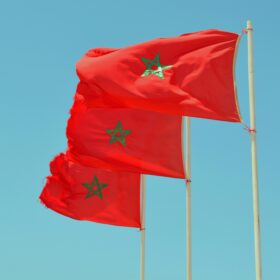
Morocco sets net‑metering tariffs for high, medium‑voltage systems
The Moroccan authorities have established new net‑metering tariffs for high, medium, and extra-high voltage systems from March 1, 2026, to February 28, 2027. The low-voltage tariff for residential PV will be set later, as the current regime mainly applies to industrial and commercial solar plants.

‘I had to work significantly harder to achieve the same level of credibility and recognition as my male peers’
This week Women in Solar+ Europe gives voice to Eva Belletti, Country Manager Germany at SP Development Europe. She says gender diversity and inclusive leadership in the renewable energy sector enhance decision-making, resilience, and long-term success, while mentorship, sponsorship, and proactive career ownership help women navigate systemic barriers and drive meaningful change.

Egypt tenders 500 MW solar project
Egyptian Electricity Transmission Co. (EETC) has launched an international tender for a 500 MW solar project in Egypt’s West Nile region. The deadline to submit prequalification documents is May 11.
Dominican Republic updates net metering rules for rooftop solar
The Dominican Republic has approved new regulations for rooftop solar, shortening approval times, digitizing processes, removing penetration caps, and increasing annual compensation for surplus energy to 100%.
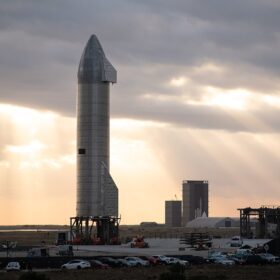
Space-based solar could be competitive by 2040, UK government finds
Investment and support could make small-scale space-based solar power (SBSP) viable, with potential for electricity generated in orbit to participate in UK contracts for difference (CfD) scheme according to new report. Launch costs have biggest impact on levelized cost of electricity (LCOE), according to analysis.

Pay-as-you-go solar often underutilized in Sub-Saharan Africa
A study of 1,000 sub-Saharan African households using off-grid PAYG solar systems found that 77% reduce their electricity use after the first year, leading to underused, often oversized systems. This persistent decline is driven by behavioural changes as well as economic constraints and highlights the need for solar designs and pricing that better match actual household energy needs.

Luxembourg launches new tender for C&I solar
Luxembourg’s Ministry of the Economy has launched a €3 million ($3.54 million) tender to support commercial and industrial (C&I) solar projects between 30 kW and 200 kW, with applications open until April 17.
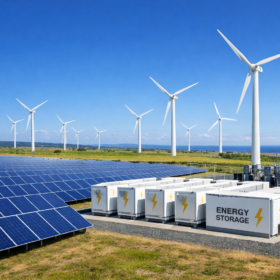
An ever-changing market: Delving into the heart of power purchase agreements
Cross-border VPPAs expose corporates to Basis Risk, causing settlement price gaps and weakening confidence in these hedging tools, contributing to a 35% drop in European PPA signings in 2025 amid complex market conditions. The market is shifting toward more structured, domestic, and hybrid PPAs, supported by BESS and modern IPPs, to better manage risk and realign buyers, sellers, and lenders.
