
Japan pilots low-weight solar panels, perovskite windows for buildings
Mitsui Home and Tokyo Gas have revealed plans to deploy Japan’s first combined on-site and virtual solar power purchase agreement (PPA), cutting factory emissions and maximizing rooftop energy use.

Switzerland introduces winter electricity bonus for solar installations
Switzerland is implementing a new winter electricity bonus for solar installations larger than 100 kW that generate over 500 kWh/kW of electricity in the winter half-year from October 1 to March 31. The country’s Federal Council has also raised the target for electricity generated by photovoltaics to 18.7 TWh by 2030.
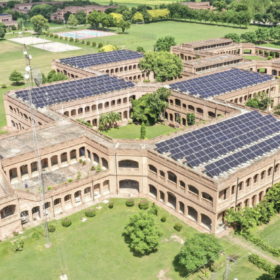
Pakistan needs to declare a ‘battery emergency’
Solar association chair argues urgent battery energy storage deployment is key to supporting continued PV boom in Pakistan. Residential solar CEO predicts surge in behind-the-meter storage demand if and when Pakistan’s generous net metering policy is wound down.

Mexico advances new wave of large-scale solar and storage projects
Mexico is seeing a surge of large-scale solar and battery storage proposals across multiple states following an October decree that sets clearer rules for private energy investments.
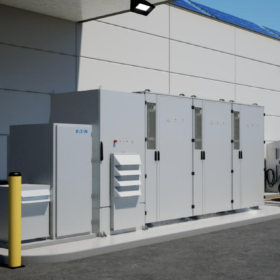
Hungary opens $151 million grant scheme for business energy storage
Hungary’s National Energy Agency has launched a HUF 50 billion ($151.34 million) grant program for businesses to install energy storage systems, including options paired with onsite renewable generation.

Kyrgyzstan, Hungary sign $300 million solar development deal
Kyrgyzstan’s National Investment Agency and Hungary’s Electron Holding have agreed to develop up to 300 MW of solar capacity in Kyrgyzstan with planned investments of $300 million.
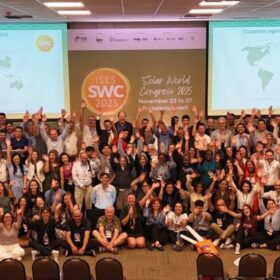
PV topics dominated the International Solar Energy Society’s Solar World Congress 2025 in Brazil
In its latest monthly column for pv magazine, the International Solar Energy Society (ISES) promotes the biennial Solar World Congress (SWC), which took place in Fortaleza-Brazil in November 2025, a few days before the COP30. The SWC scientific program has traditionally been dominated by presentations on solar radiation and solar thermal applications, but this year, photovoltaics was the focus of most of the presentations. This reflects the massive adoption of PV all over the globe, which, at the current pace, will dominate the electricity mix by the end of the decade.
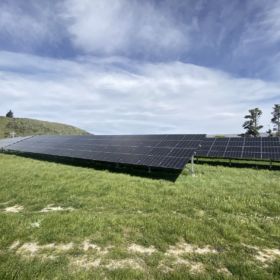
Hydro Tasmania seeking 1,500 GWh new solar, wind
Hydro Tasmania is seeking to increase its renewable energy generation to meet growing energy demand and support the Australian state’s industrial expansion.
US energy offices folded into new structure at Department of Energy
The US Department of Energy (DoE) has removed renewable energy, grid modernization, and carbon-management units from its organizational chart and consolidated them into the Office of Critical Minerals and Energy Innovation, a shift confirmed in newly published federal documents.

Italy issues new rules for PV project siting, solar fiscal breaks
The Italian government has reduced the regions’ influence on permits for photovoltaic and wind energy by centralizing the decision-making process. It has also issued new rules for tax relief under the so-called Transizione 5.0 Decree.
