
Saudi Arabia could hit net-zero emissions by 2060, with 151 GW of solar
Saudi researchers outlined pathways for Saudi Arabia to reach net-zero power sector emissions by 2060, requiring up to 3.6% of land – mostly for onshore wind – with 151.3 GW of solar PV covering only 0.16% of the country.
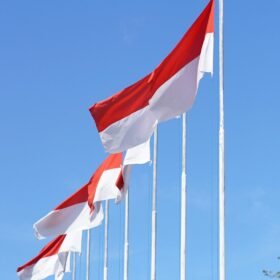
Indonesia’s solar capacity reaches 1.49 GW
Indonesia surpassed 1 GW of cumulative solar capacity in 2025, with an estimated 546 MW of added solar last year, led by deployments in the rooftop C&I segment.

U.S.-India trade deal reduces solar tariffs
Tariff reductions under the new U.S.-India trade agreement lower import costs for solar modules and energy storage components. Reciprocal tariffs were effectively reduced from 50% to 18%.
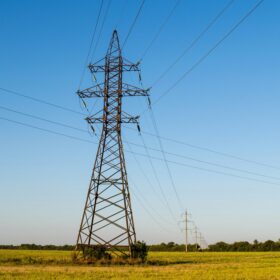
Germany, France, Netherlands curtail 3.9 TWh of renewables in 2025
Analysis by energy advisory service Montel finds Germany, France and the Netherlands all saw record levels of renewables curtailment last year, with the build out of solar in each market contributing to midday generation peaks and consequential price cannibalization.

Chile installs 1.1 GW of PV in 2025
Chile installed 1.13 GW of solar capacity last year, raising total solar capacity to 11.63 GW, while over 4 GW of renewable projects are under construction, according to the National Energy Commission (CNE).

WTO finds US clean energy tax credits violate trade rules
The WTO ruled that U.S. clean energy tax credits under the Inflation Reduction Act violate international trade rules by giving domestic products preferential treatment over Chinese goods. The decision specifically targets the ITC and PTC Domestic Content Bonus Credits.

Spain deploys 1.13 GW of solar for self-consumption in 2025
Spain installed 1.14 GW of solar capacity for self-consumption in 2025, lifting cumulative capacity to 9.3 GW, as residential and commercial installations declined while industrial and off-grid segments showed greater resilience, according to data from the Spanish Photovoltaic Union.

Bulgaria installs 1.4 GW of solar in 2025
Bulgaria installed over 1 GW of solar for the third consecutive year in 2025 and is forecast to add over 2 GW this year thanks to a large pipeline of utility-scale projects.

‘Women with young children are frequently expected to prove they are prioritizing work’
This week Women in Solar+ Europe gives voice to Alba Sande, lawyer at Spanish law firm ASande Legal. She states that, despite progress, women remain underrepresented in the renewable energy industry. “As a woman and a mother, I have often encountered the unspoken assumption that professional ambition must take a backseat to family life, a bias rarely applied to men,” she says.

Sweden deploys 652 MW of solar in 2025
Sweden deployed less solar in 2025 than the year prior despite record growth in the large-scale segment. Solar association Svensk Solenergi predicts last year was likely the bottom of Sweden’s installation curve.
