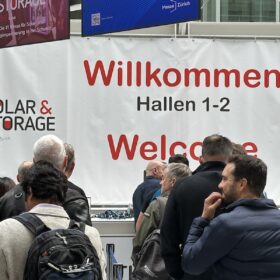
Solar & Storage Live Zurich 2025 reflects growth of Swiss PV sector
At the Solar & Storage Live trade fair, Swiss and European wholesalers were represented with products from manufacturers in Germany, Lithuania, Norway, Switzerland, and, of course, China. Some manufacturers also had their own booths, and there was also a new area for installers.

‘Preaching to the unconverted’ – EUPVSEC 2025 kicks off in Bilbao
The annual European Photovoltaic Solar Energy Conference (EU PVSEC) got underway today, this year in Bilbao. Conversations on the first morning focused on the need for strong policy support across multiple areas of renewable energy. While the week is sure to be filled with new ideas on the technological side, it’s clear that ensuring policies to support further growth in renewable energy is a growing challenge. Those working in the solar industry and research community need to reach a wider audience, and one that may not be as easy to convince.
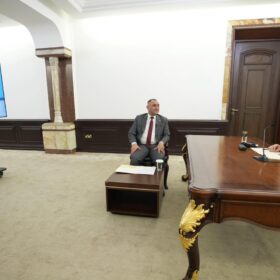
Iraq inaugurates first phase of largest solar plant to date
The first phase of the Karbala solar power plant, totaling 22 MW, is now online. Its capacity is expected to reach 75 MW within the next two moves, ahead of a final 300 MW target.

Renewables supply record 77.9% of power in Australia’s main grid
The share of renewables in Australia’s main electricity grid continues to reach new highs, delivering 77.9% of electricity demand on Sunday with solar power contributing more than 55% of the record-breaking clean energy mix.
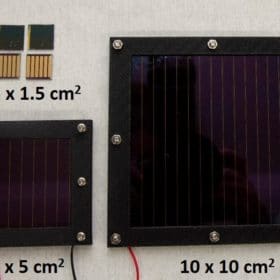
Japan launches subsidies to accelerate perovskite solar deployment
The Japanese government has launched applications for two targeted funding schemes to accelerate deployment of lightweight perovskite solar tech and incentivize battery-backed systems that enhance grid resilience and economic viability.
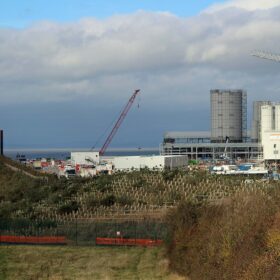
Record nuclear power output in 2024 irrelevant to global energy landscape
Nuclear plants generated a record amount of power in 2024, surpassing record set in 2006, but industry optimism is not backed by economic data or investment, says the World Nuclear Industry Status Report 2025.

‘Progress is happening, but it remains slow’
This week Women in Solar+ Europe gives voice to Maria Gil, Business Development EU at Spain’s Solargrade. She says that real change in the energy industry only comes when companies and institutions move beyond statements and consistently turn policies into sustained action. “As the sector grows and requires more workers, it must bring in talent with equity at its core, ensuring inclusion moves from policy documents into everyday practice,” she states.
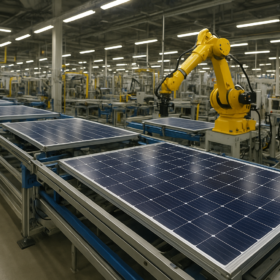
Netherlands ends incentive scheme for domestic PV manufacturing
The Dutch government says large-scale solar panel production is no longer viable, closing its SolarNL incentives to building- and vehicle-integrated products, heterojunction modules, and perovskite-silicon tandem panels.
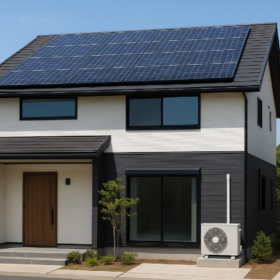
Making the business case for solar-plus-storage with heat-pumps in Japan
A Japanese research team has evaluated the affordability of photovoltaic-battery systems featuring heat-pump water heaters and air conditioning units across nine regions of Japan. They analyzed three price policies and two loan types, identifiying a tradeoff between net demand and cost according to the capacity of the solar-plus-storage system.
Solar Stewardship Initiative sets new targets, reporting requirements
The Solar Stewardship Initiative (SSI) says all solar modules bound for the European Economic Area, Switzerland and the United Kingdom must come from manufacturing sites certified for both environmental, social and governance standards and supply chain traceability by early 2028.
