
Solar PV needs more nuanced assumptions in energy system modelling
Solar PV currently evolves as the most important source of energy. Many energy system models still do not consider technologies that are already standard in today’s solar PV market. This article provides a call to energy system modelers to better reflect real-world developments in scenarios aimed at giving an outlook to the energy transition by providing key research works of LUT University researchers as food for thought.

Slow progress on access to electricity in Sub-Saharan Africa
Sub-Saharan Africa accounts for eight of every ten people lacking access to electricity, according to the International Energy Agency, with early data for 2025 suggesting the rate of progress is set to remain broadly flat.
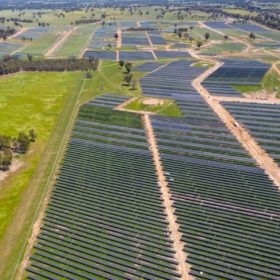
Solar-plus-storage dominates latest Australian CIS tender
Some 11 of the 20 projects allocated in the latest round of the Capacity Investment Scheme (CIS) feature solar sites alongside battery energy storage systems (BESS).
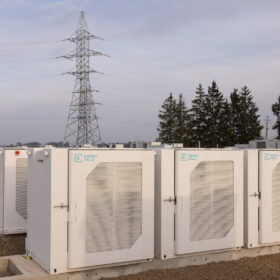
Lithuania responds to overwhelming interest with new €45 million energy storage call
Earlier this year, the Lithuanian Ministry of Energy issued a call for at least 800 MWh of energy storage but ultimately approved support to five times that capacity.

Brazilian law reignites debate on framework for distributed solar, storage
Provisional measure (MP) 1,304 introduces a charge for certain distributed-generation (DG) system operators if an Energy Development Account (CDE) spending cap is breached.

Over 6 GW of solar approved under Malaysia’s large-scale solar program
Malaysia’s large-scale solar scheme (LSS) has approved 6,028 MW of solar capacity to 117 companies across six bidding rounds to date, according to the country’s Ministry of Energy Transition and Water Transformation.

Japan’s Aomori prefecture sets capacity tax on large wind, solar
Japan’s Aomori prefecture is introducing a capacity-based levy on large onshore wind and solar projects, using zoning criteria to align renewable expansion with environmental, historical, and cultural priorities.
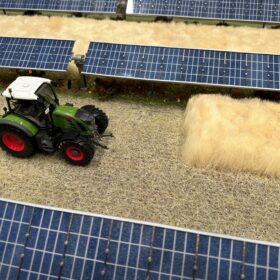
Czechia expands rules for agrivoltaics, permits vertical installations
Amendments to rules governing agrivoltaics in Czechia mean it will now be possible to deploy vertical agrivoltaics, or have installations on arable land if vegetables with high or very high labor intensity are grown at least once every three years.
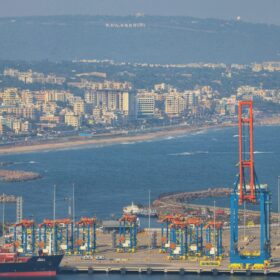
India’s large-scale solar expansion faces land, technical, climate hurdles
Developers are navigating fragmented land constraints, transmission limits, and extreme weather conditions as India scales utility-scale solar to meet its 2030 clean energy targets.
India reaches 490 MWh energy storage capacity by June 2025
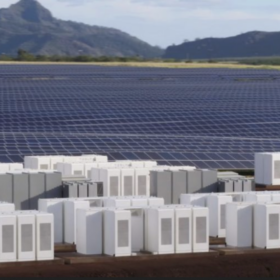
Policy incentives and hybrid solar-plus-storage projects are accelerating India’s energy storage sector despite a slowdown in first-half installations.
