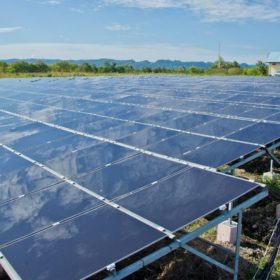
Chinese investment in renewables soars under Belt & Road initiative
A report by Greenpeace has found in the five years since China announced the continent spanning ‘One Belt, One Road’ infrastructure plan, investment in Belt & Road countries has supported 12.6 GW of wind and solar power generation capacity. That compares with just 450 MW which came online in the territories before 2014. The initiative has also supported 68 GW of new coal capacity.
Tritium chargers will enable UK electric vehicle drivers to “fill up” faster and go further
The U.K. is leaping ahead in its deployment of EV charging infrastructure. Box Energi has chosen Australia’s Tritium Veefil-RT technology to ramp up the number of refill sites around the U.K. in a move which will boost not only accessibility and driving range but confidence in emissions-free driving.

State news service: China has already connected 870 MW of this year’s subsidized PV projects
The state-owned China News Service today reported almost $80 million is left in the pot for large scale project subsidies this year despite almost 420 facilities with a combined generation capacity of 1.77 GW having missed out in the auction.

Nigeria aims to lower solar electricity tariffs agreed three years ago
In July 2016 Nigeria signed power purchase agreements with 14 utility scale PV projects with a total generation capacity of 1,075 MW. None of the projects has reached financial close and pv magazine has learned the government wants to reduce the agreed tariffs.

CATL to enter Japan’s residential storage market
Previously known for its automotive activity, CATL is turning to another promising sector to generate demand for its battery cells. With the first few hundred thousand Japanese solar households seeing their 10-year FIT contracts expire, demand for small scale storage is on the rise

Chinese solar production figures continue to ramp up
Quasi-governmental body the CPIA has released first-half figures for the world’s biggest solar marketplace which show production volumes for export markets continuing to expand and the domestic picture set to rebound after public solar subsidy levels were published.
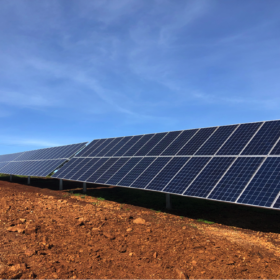
Solarcentury chief calls for policy support for UK solar on day Boris Johnson is anointed
The London-based developer revealed blockbusting annual figures which show it is debt free, has almost £20 million in the bank, raked in more than half that figure in net profits in 2018-19 and expects twice as much in a year’s time.
Ukraine makes a bid for PV growth
The final segment in pv magazine’s look at unsung solar markets heads to Ukraine, where a generous feed in tariff and developments in the corporate PPA segment looks likely to push installations past the 1 GW mark for 2019.
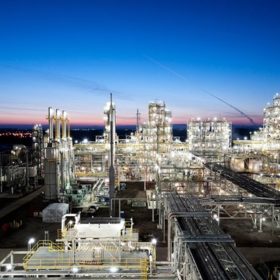
No respite for REC Silicon as shutdown dominates Q2 figures
The Norwegian polysilicon supplier – which has most of its manufacturing operations on U.S. soil – cannot give any estimate on when its solar material production lines will return, and has been left entirely dependent on the semiconductor products made by its Montana facility.
Greece returns to growth
After a few years of stagnation, Greece’s PV industry is back with a plan to tender 430 MW in 2019 and to develop hybrid PV and wind projects.
