India approves solar cell makers with 13 GW of annual production capacity
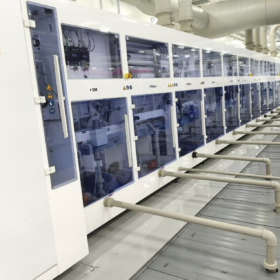
India has approved six manufacturers for its Approved List of Models and Manufacturers (ALMM) for solar cells, totaling 13 GW of annual production capacity. The list includes FS India (First Solar’s India unit), Jupiter, Emmvee, Mundra (Adani), Premier Energies, and ReNew.
Tindo Solar to scale output to 180 MW with Australian government grant
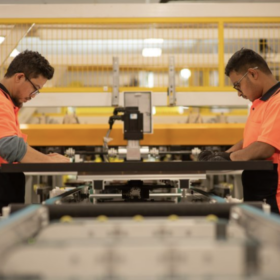
Australian solar module manufacturer Tindo Solar will look to ramp up domestic production capacity after securing funding through the federal government’s $1 billion Solar Sunshot Program.

China poised to remain dominant PV supplier through 2030
New research from Switzerland showed that the recent efforts to counterbalance the dominance of China in the PV industry may lead to “cost-significant” inefficiencies across the entire supply chain. The scientists found, however, that achieving regional supply chain goals can benefit the global PV ecosystem.
California urged to fast-track 23 GW of renewables near gas plants
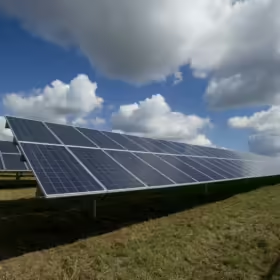
California could move quickly to enable 23 GW of renewables near existing thermal generators, in time for the projects to qualify for tax credits before they expire, says a think tank policy director.

EU updates list of priority cross-border renewable energy projects
The list of thirteen renewable energy cross-border projects are eligible to apply for construction or study grants under the Connecting Europe Facility.

Czechia deploys 357 MW of solar in H1
Czechia’s solar installations in the first half of the year were down on the first six months of 2024. At the end of June 2025, cumulative capacity reached 4,825 MW.

New York Power Authority doubles renewables target to 6.6 GW
The New York Power Authority has doubled the capacity target in its renewables plan to 6.6 GW after criticism that its initial 3.3 GW proposal fell short of state climate goals.

Germany reduces feed-in tariffs for solar up to 1 MW
Germany has set new feed-in tariffs for solar systems up to 100 kW starting Aug. 1, ranging from €0.06327 ($0.073)/kWh to €0.1247/kWh, regardless of self-consumption.

Uzbekistan certifies first solar plant under I-REC system
Uzbekistan’s Ministry of Economy and Finance has approved an 823 kW solar plant to begin trading International Renewable Energy Certificates (I-REC), marking the country’s fifth renewable energy project to join the scheme.

Double materiality assessment: Why rigorous ESG risk mapping isn’t optional anymore
Double Materiality Assessment (DMA) has become a central concept in Environmental, Social, and Governance (ESG) frameworks, especially under recent regulatory initiatives like the EU Corporate Sustainability Reporting Directive (CSRD). While implementation of DMA will only become mandatory for many companies over the next few years, there are already discussions at the EU commission in Brussels about simplifying the process to ease adoption. As an early adopter, Trinasolar shares insights on the purpose and benefits of DMA, makes a strong case for full-scope transparency, and reflects on key learnings from the 2024 DMA matrix rollout.
