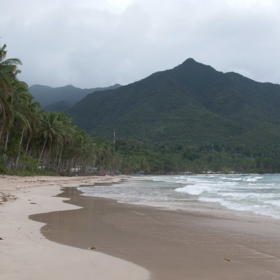
Philippines issues terms for renewables auction with storage
Pairing solar plants with battery energy storage systems (BESS) will be the main strategic focus for the country’s upcoming renewable energy auction. Each project must have a minimum storage duration of four hours to ensure sufficient grid support and energy reliability.
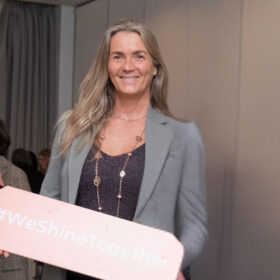
‘Gender equity benefits everyone in the workplace’
This week, Women in Solar Europe (WiSEu) gives voice to Miriam Rodríguez, President of Spain’s Electra Energy S. Coop. She says one of the most striking inequalities she encountered throughout her career was the difference in salaries between men and women in similar roles, the gender pay gap. “At one point, I discovered that a male colleague at my same business level was earning a higher salary. Fortunately, he realized the unfairness, and the salaries were adjusted,” she states.

Dutch regulator launches probe into home solar feed-in costs, compensation
The Dutch Authority for Consumers and Markets (ACM) says it will study how energy companies are incorporating home solar costs into prices, as feed-in costs have risen 10% over the past month.

Belgium’s Wallonia region added 92 MW of solar in 2024
The rate of solar installations slowed in the Belgian region of Wallonia last year, as government incentives for residential solar came to an end. Brussels-based renewable energy federation Edora says deployment will need to accelerate across all market segments if the region is to meet its 2030 solar targets.
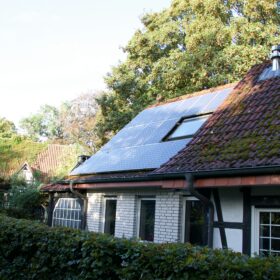
Rooftop solar could supply two-thirds of global power, study finds
Researchers at the University of Sussex have found that widespread deployment of rooftop solar could cover the vast majority of the world’s electricity consumption, while lowering global temperatures by up to 0.13 C.
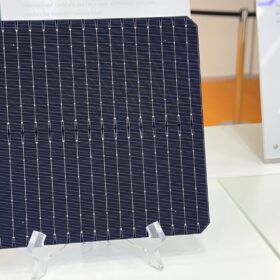
India’s MNRE says imported silicon wafers do not meet domestic PV criteria
India’s Ministry of New and Renewable Energy (MNRE) has ruled that solar cells made with imported diffused silicon wafers, known as “blue wafers,” do not qualify for government programs requiring domestically manufactured PV cells.

Italy strikes down Sardinian moratorium on renewables
The decision is significant, as “it sets out principles whose scope exceeds the issue of the moratorium, affirming the unconstitutionality of regional regulations that conflict with the decarbonization objectives established at the European and national level,” says attorney Claudio Vivani.
Bangladesh’s PV tenders fail to attract investors
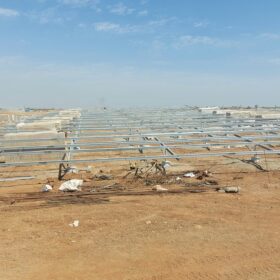
Bangladesh’s tenders for 41 solar power plants totaling 2.63 GW have failed to draw any bids, as investors are holding back from projects launched between December and January.

Africa’s solar capacity forecast to double over next four years
A report from the Global Solar Council says Africa’s solar deployment is set to accelerate in the coming years, but stresses that mobilizing finance and strong regulatory frameworks will be required to attract investors.
UK regulator reveals criteria for long-duration storage
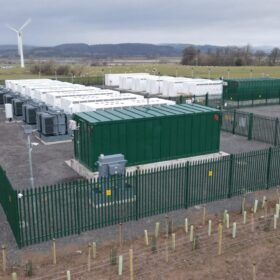
Long duration energy storage (LDES) support scheme will have eight-hour minimum. First application round opens to well-established technologies, such as lithium-ion battery technology, with at least 100 MW capacity in April 2025. Flow batteries, compressed air, and liquid air likely to progress in second round, says regulator.
