
Mexico aims to deploy 4.67 GW of large-scale PV by 2030
Mexican President Claudia Sheinbaum has unveiled a $23.4 billion plan to expand the national electricity system, targeting 13.02 GW of new capacity by 2030, including 4.67 GW of large-scale solar.

Integrating low-temperature heat sources in industrial-scale heat pumps
The Fraunhofer ISE has designed a novel method for assessing the potential of low-temperature heat sources for large-scale heat pumps. The five-step process was tested on the German city of Fellbach, enabling the identification of heat sources with LCOH lower than €0.1/kWh.

Turkey allocates 800 MW in PV tender with final price of $0.0325/kWh
Turkey has awarded 800 MW of solar capacity in its latest PV tender, with the final price set at $0.0325/kWh. The authorities selected six projects ranging from 40 MW to 385 MW.
US government raises tariffs on Chinese solar polysilicon, wafers, cells to 60%
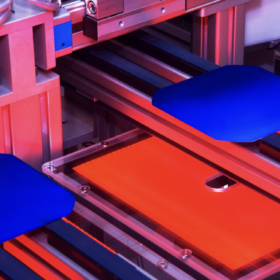
US President Donald Trump has issued an executive order imposing new 10% tariffs on Chinese solar materials and delaying similar tariffs on Canadian and Mexican energy imports. The move follows former President Joe Biden’s tariff hikes, bringing total duties on Chinese solar polysilicon, wafers, and cells to 60% under Section 301.
Community managers key to wider adoption of energy communities
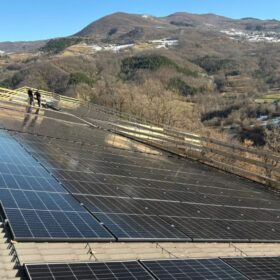
New research from France suggests that energy communities could benefit from dedicated community managers to address operational complexities. Researchers says that this role could offer contracts or assurances to ease concerns among risk-averse members.
Premier Energies halts plans for US solar cell factory
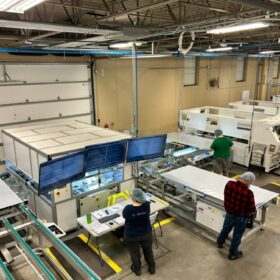
India’s Premier Energies says it has suspended its plans to build a factory in the United States as it waits for “the regime in the US to settle down and be clear on what they want to do.”
A 920% tariff on anode materials from China ‘would throw the economics of U.S. storage out of whack’
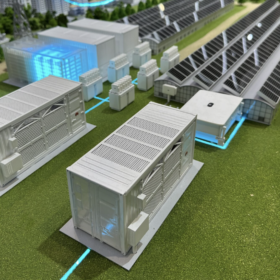
Battery installations in the U.S. are threatened by the imposition of anti-dumping, countervailing duties on active anode materials. The supply chain for Active Anode Materials (AAM) is dominated by Chinese producers, with attempts to establish the full supply chain outside of China years away.

Croatia’s new solar additions hit 397.1 MW in 2024
The Renewable Energy Sources of Croatia Association (RES Croatia) says Croatia’s solar market is growing year over year. But with residential and industrial rooftops accounting for most new installations, a key focus is enabling utility-scale growth.

France’s top audit body questions feasibility of EDF’s nuclear plans
France’s Cour des Comptes has issued a warning about rising nuclear energy costs. It is urging state-owned utility EDF to reduce its financial risks in international projects.

Load shedding returns to South Africa
The South African Photovoltaic Industry Association (SAPVIA) says that despite the return of load shedding over the weekend, the nation is still on track to permanently eliminate power outages.
