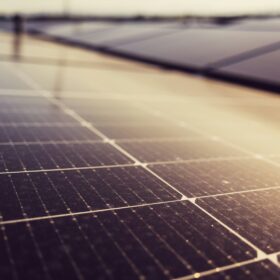
California bill introduced to mandate a VPP implementation plan
Virtual power plants, which could save state ratepayers an estimated $550 million per year, are connected aggregations of distributed energy resources like rooftop solar and energy storage.

‘The solar industry can offer unique opportunities for women to take on leadership, technical roles’
This week, Women in Solar Europe (WiSEu) gives voice to Letizia Coradeschi, Investments at Switzerland’s SUSI Partners AG. She says that normalizing parental leave and flexible work schedules that support work-life balance would further help retain female talent past junior and mid-level positions. “Despite the hurdles, my personal experience led me to believe that, coupled with persistence and resilience, this is a space where women can thrive and lead,” she states.

Airports Company South Africa issues tender for three PV plants totaling 9.5 MW
The tender covers the design, supply, installation, commissioning and maintenance of three proposed projects to be based at Tambo International Airport, King Shaka International Airport, and Cape Town International Airport. Closing dates for submission is March 17.
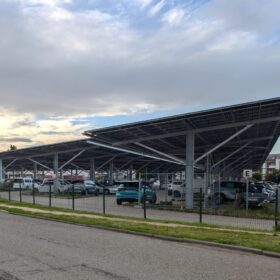
France launches 400 MW C&I solar tender
The French authorities intend to allocate 400 MW of PV capacity through the procurement exercise, which is open to PV installations exceeding 500 kW in size.

ACWA Power building hydrogen bridge between Europe and Middle East, North Africa
In an exclusive interview with pv magazine, ACWA Power CEO Marco Arcelli said the Saudi energy giant is currently exploring opportunities to build a hydrogen corridor between Europe and the Middle East and North Africa. He spoke about the company’s current 2 GW hydrogen project in Neom and presented the company’s plans for renewable energy and desalination.
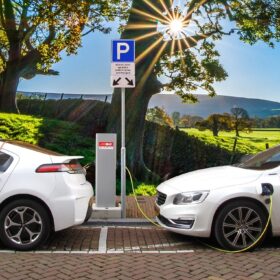
Daytime charging of electric vehicles further expands adoption of photovoltaics
Photovoltaics continues adding capacity at a rapid pace, and 2024 was another record year for solar PV deployment. In the meantime, despite recent hurdles to widespread adoption in some countries, electric vehicle uptake grew 25% last year. Assuming a 10 kWh/day energy requirement for every new EV, the 17 million new EVs sold in 2024 would have added another 50-70 GW of new PV generation worldwide.

Slovakia added 274 MW of PV in 2024
Last year’s solar additions, led by installations in the commercial and industrial sector, took Slovakia’s cumulative solar capacity to over 1 GW.
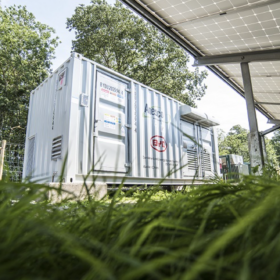
India mandates co-locating energy storage with solar projects
India’s Ministry of Power has mandated all renewable energy implementing agencies and state utilities must incorporate a minimum of two-hour co-located energy storage systems (ESS), equivalent to 10% of the installed solar project capacity, in future solar tenders.
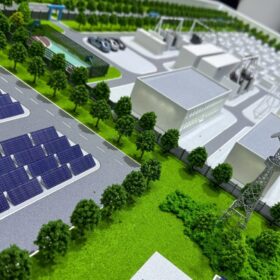
Massachusetts allows increased demand charges to drive energy storage
The Massachusetts Department of Public Utilities has approved a rate change that allows large electricity customers, specifically large business customers, to pay a transmission coincident peak demand charge instead of a volumetric transmission charge.
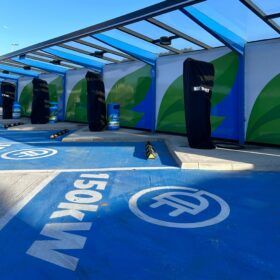
California Energy Commission announces $55 million in funding to build out EV charger network
The CEC estimates that approximately 24,000 new chargers were installed in the first half of 2024, and the Fast Charge California Project aims to incentivize even more.
