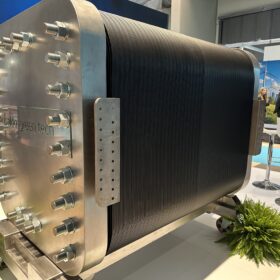
EU allocates 1.1 GW of electrolyzer capacity in third hydrogen auction, lowest bid comes in at €0.44/kg
The European Commission has allocated €1.09 billion in support through the third European Hydrogen Bank auction, selecting nine projects across seven countries. The procurement exercise was significantly oversubscribed with 58 bids from 11 countries. It awarded fixed hydrogen production premiums ranging from €0.44 ($0.51)/kg to €3.49/kg.
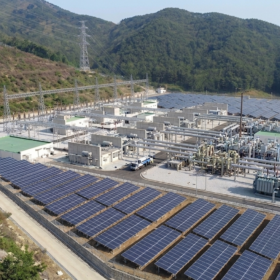
South Korean utility to install 95 MW of solar at substations by 2030
Korea Electric Power Corp. (KEPCO) says it will install 95 MW of solar capacity across 500 substation sites nationwide by 2030, using surplus substation land to meet South Korea’s K-RE100 public-sector renewable energy target.
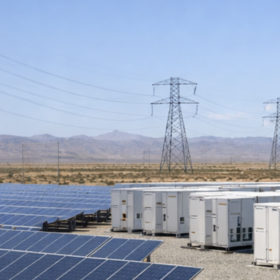
Firm solar and storage costs fall to $54/MWh, says IRENA
A new report by the International Renewable Energy Agency (IRENA) finds that round‑the‑clock solar and wind paired with battery storage deliver power at lower cost than new fossil fuel generation in high‑quality resource regions.

Brazil revokes 3.57 GW of solar permits amid grid connection constraints
Brazil’s Aneel has revoked 3.57 GW of photovoltaic project authorizations across four resolutions, mainly at the request of developers citing insufficient grid evacuation capacity and rising curtailment.
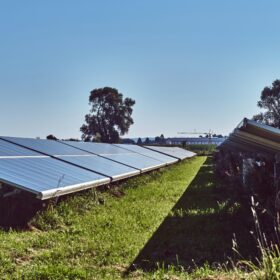
EU solar and storage push could cut power system costs by nearly half
A scenario analysis by SolarPower Europe, modeled by Rystad Energy, finds that accelerating PV and battery storage deployment could save the European Union €223 billion ($260.7 billion) in gas imports between 2026 and 2030 and reduce wholesale electricity prices by 14% compared with 2025 levels.
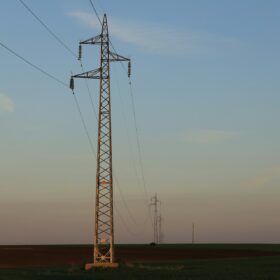
Dutch regulator plans grid fee for large solar producers
The Netherlands Authority for Consumers and Markets is progressing with plans to introduce a grid fee that would see large-scale electricity producers, including solar power plants, contribute to the costs of the electricity grid. Its introduction is expected no earlier than January 2032.
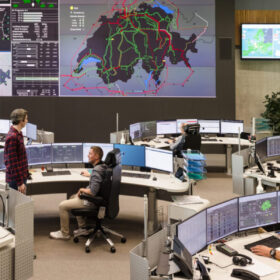
Swiss balancing energy market now open to C&I solar
With the “AMAG Energy Flexpool,” existing photovoltaic systems in commercial, industrial, and multi-family buildings can now participate in the Swiss balancing energy market without additional hardware and via fully remote integration. Self-consumption, however, remains fully possible.
EU funding ban on high-risk inverters, including Chinese suppliers, extends to BESS
The new policy has already applied, and impacts billions in funding from the European Investment Bank on renewable projects including standalone and co-located storage.

Japan reopens NEDO perovskite solar call with single-junction focus
Japan’s New Energy and Industrial Technology Development Organization (NEDO) has opened a supplementary call for proposals on mass production of next-generation single-junction perovskite solar cells, with submissions due by June 3.

Free market, curtailment, and storage reshaping Brazilian solar sector
Brazil’s solar sector is entering a new phase marked by curtailment, grid constraints, and regulatory shifts, with growth increasingly tied to new business models and market dynamics. Industry leaders say storage will be central to this transition, enabling system integration, mitigating risks, and unlocking future demand.
