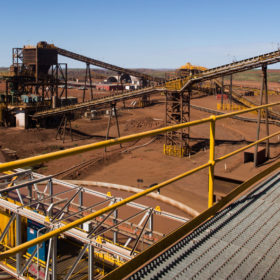
Carbon accounting for beginners
A new report from Rocky Mountain Institute in the U.S. explores the need for companies to disclose information about greenhouse gas emissions throughout their supply chains, and the most effective ways to do this whilst ensuring consistency and comparability of collected data across multiple industries.

Toyota to develop fuel cell vehicles in China
The Japanese marque has laid out plans to hold a controlling stake in a JV planned in Beijing this year which will also involve four state-owned carmakers.
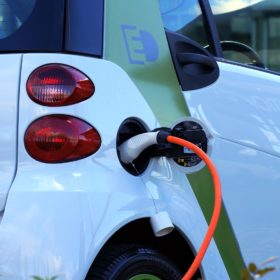
Demand for gas-guzzling SUVs surges in China as electric car sales plummet
The market last month saw a sharp rebound in the sales of traditional, internal combustion engine vehicles as Covid-19 restrictions continued to ease. Analysts have predicted a similar rebound in Europe as the continent emerges from the public health crisis.
Does solar sustainability go far enough?
Solar PV is on track to become a terawatt-scale industry. With this opportunity comes challenges, particularly when future raw material and manufacturing volumes are considered. For progress to be made, sustainability becomes a crucial issue. Already the first global sustainability standard for solar modules and inverters has been introduced, and it is likely mandatory measures will be applied in Europe via the Ecodesign directive. Ahead of the upcoming pv magazine Roundtable on sustainability, SMA answers some key questions about certification.
Green finance is more than a bubble
Felicia Jackson explains why green finance is changing the energy world and is not just a dream for solar fans. Hailing from London, she is a financial expert, a co-founder of New Energy Finance, now Bloomberg NEF, a member of the UN working group that discusses methods for environmental goals, and a professor at the University of London. Jackson will also author a pv magazine white paper on the topic, scheduled to publish this summer.

PPA signed for solar-wind-storage microgrid on Saint Helena
Pash Global, a subsidiary of multinational commodities trader Trafigura Group, has signed a renewables power purchase agreement for a project on the British overseas territory of Saint Helena. The microgrid will help the South Atlantic island’s aim of investing in renewables, reducing diesel dependence and increasing fuel security and price stabilization.
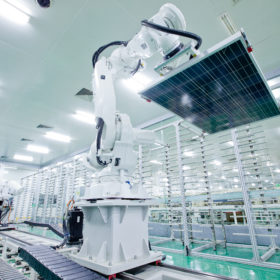
Chinese PV Industry Brief: Jinko’s new capacity and a 200 MW solar park
JinkoSolar has begun construction of a new 16 GW module production base in Yiwu city, Zhejiang province and Eging PV has resumed a 200 MW solar project in Qitai county in the Xinjiang Uygur Autonomous Region, after securing approval from local authorities. The China National Energy Administration has confirmed the nation can add no more than 48.45 GW of solar to the grid this year.
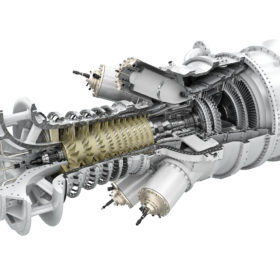
Siemens and Engie plan 12 MW green hydrogen and gas project in France
A €15.2 million power-to-X-to-power hydrogen storage facility is being planned in Saillat-sur-Vienne, in Nouvelle-Aquitaine. The project partners want to use renewable energy from the grid and water to produce and store electrolyzed hydrogen. It would then be mixed with natural gas to power an upgraded, 12 MW Siemens SGT-400 industrial gas turbine which previously generated steam for local manufacturing and would be able to return power to the grid to meet demand.
Narendra Modi calls for a rooftop-solar-powered city in every Indian state
The prime minister again emphasized the need for India to develop its own solar manufacturing industry and also urged officials to get on with plans to make the region of Ladakh carbon-neutral.

Northvolt and aluminum company plot Norwegian EV recycling plant
The sustainable lithium-ion battery manufacturer wants to secure raw materials to recycle into its products and will tap one of the world’s most advanced electric vehicle markets for its end-of-life batteries.
