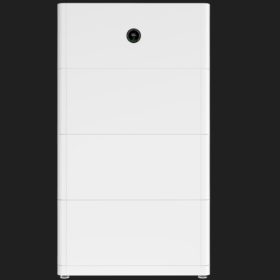
Growatt releases new battery for rooftop solar applications
Growatt’s new APX HV cobalt-free lithium iron phosphate (LFP) battery has a storage capacity of 5 kWh and a nominal voltage of 650 V. It can be scaled up to six battery modules, for a maximum capacity of 30 kWh, or 60 kWh in parallel. It comes with a 10-year warranty.
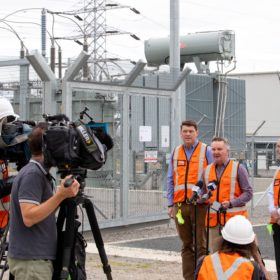
Australian government seeks to deliver 4.2 GWh of battery energy storage
The Australian government has announced a $117.5 million (AUD $176 million) funding injection which it expects will unleash over $2 billion of investment in advanced battery technology, delivering a step change in grid-forming capability.
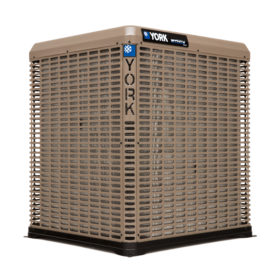
US manufacturer develops heat pump for cold climates
Johnson Controls has fabricated an air-source heat pump prototype for locations with temperatures below -29 C. Its York YZV and York HMH7 cold climate heat pumps can already operate in -15 C conditions.
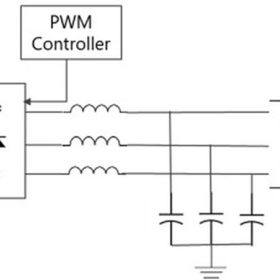
Lowering grid costs with voltage support from PV inverters at night
US researchers have proposed the use of solar inverters in utility-scale solar assets to replace expensive voltage compensators, in order to provide voltage support at night. They said reactive power from PV inverters could be significantly cheaper and suggested the introduction of incentives to convince PV plant owners.
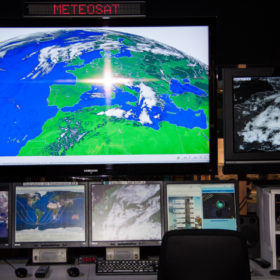
New model to predict cloud movements, improve grid integration for renewables
Meteo for Energy offers meteorological prediction and energy production models for photovoltaic, solar thermal, and wind power generation. The new model applies “deep learning” to images from the Meteosat satellite.
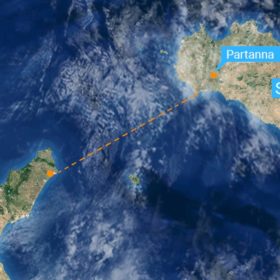
Italy, Tunisia secure €307 million for 600 MW interconnector
Italian grid operator Terna and its Tunisian counterpart, Steg, have secured €307 million ($327 million) to invest in an €850 million subsea cable link between Partanna, Sicily, and Cape Bon, Tunisia.
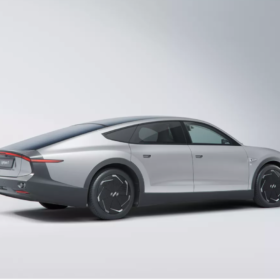
The mobility rEVolution: Lightyear becomes first to launch series production of solar EVs
Acciona Energia is setting up its first V2G network in Spain, ADS-TEC has unveiled a battery-based, all-in-one system with up to 300 kW of charging power, and Volkswagen is looking for a location for its first battery cell factory in North America.
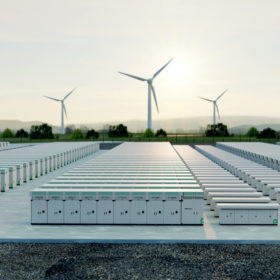
US research institute proposes compensation for storage
Pacific Northwest National Lab (PNNL) researchers have developed a new framework to compensate energy storage as a dual-use asset.

Big solar already pulling its weight on emission reduction – especially in Chile
Following a disappointing COP27 climate change summit in November, solar industry veteran Philip Wolfe reviews the contribution utility-scale PV is starting to make to emissions reduction.
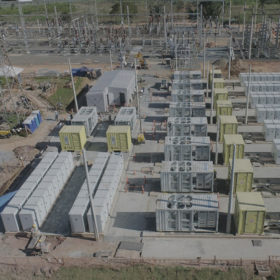
Brazil’s first large-scale battery goes online
Grid operator ISA CTEEP has started commercially operating a large-scale battery energy storage system (BESS) at the Registro substation in the Brazilian state of Sao Paulo. The 30 MW/60 MWh BESS is expected to provide backup power to the grid during hours of peak demand in summer.
