
What happens when type-C cracks strike photovoltaic modules
An international research team used high-resolution electroluminescence imaging to quantify type-C cracks in 100 PV modules after 11 years of operation, linking crack distribution to real-world power loss. Concentrated cracks within individual cells were found to cause disproportionately high losses, highlighting the importance of cell-level crack analysis for effective PV maintenance.
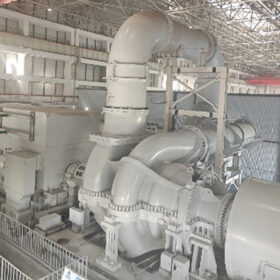
Chinese Academy of Sciences unveils 101 MW compressor for compressed air energy storage
The new compressor is described as the world’s most powerful single-unit compressed air energy storage (CAES) system, with a maximum discharge pressure of 10.1 MPa and an efficiency of 88.1%.

Brightspot Automation launches large-area PV photoluminescence testing tool
The U.S.-based metrology equipment manufacturer has launched a non-contact photoluminescent imaging system to reveal defects and other non-uniformities in silicon, thin film, and III-V multijunction PV devices.
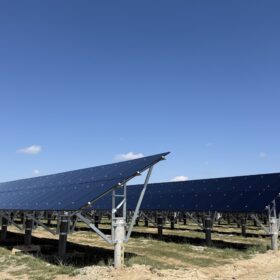
Why AI matters for scaling perovskite solar modules
pv magazine spoke with Fan Bin, founder of GCL Optoelectronics, about how high-throughput experimentation and AI-driven optimization are accelerating perovskite development, and why stability, and not efficiency, remains the key challenge on the path to mass production
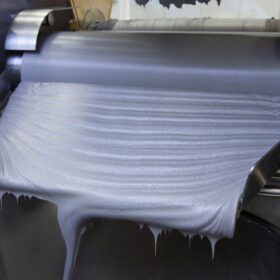
Silver-saving efforts ramping up in solar industry, says Heraeus
Rising silver prices are putting pressure on solar manufacturers, prompting greater focus on copper and other alternatives to reduce costs. Heraeus says it expects silver demand from photovoltaics to decline this year despite stable global installations.
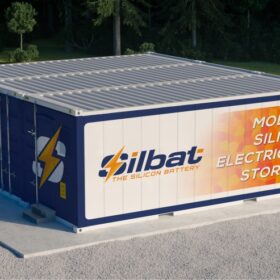
Silbat silicon batteries guarantee uninterrupted power supply for 14 days
The silicon batteries developed by the Spanish startup Silbat are spearheading the Research and Analysis of Long-Duration Energy Storage for Operational Resilience in Critical Military Infrastructures (ARMIC) project, covering Technology Readiness Levels (TRL) 7 to 8.
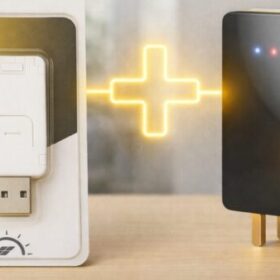
French startup launches ‘universal’ home energy management system
PvPilot has introduced a home energy management system (HEMS) designed to be compatible with all major brands of solar equipment, targeting France’s fast-growing residential self-consumption market.

The prospects for ultra-high-temperature heat pumps
An international research team has reviewed emerging solid-state and gas-cycle heat pumps capable of reaching temperatures of up to 1,600 K, assessing their challenges, applications, scalability, and technology readiness levels. The researchers say these systems could outperform conventional high-temperature heating technologies by achieving coefficients of performance above 1.

Brazil targets 107 GW of solar by 2035 under energy plan
Brazil has opened consultations on its PDE 2035 energy plan, which projects 107 GW of solar by 2035 – including 78 GW of distributed generation – with battery storage reaching 7 GW, or 2% of the power mix.

South Africans are ‘off-gridding’
Research exploring off-grid practices in South Africa has defined three forms of off-gridding, with reasons for being off-grid varying depending on income background, in turn highlighting that decentralized energy transitions can reproduce existing inequalities.
