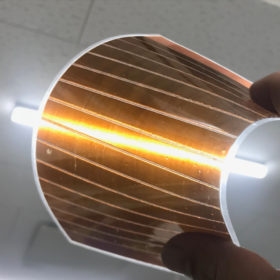
Japan aims to deploy 20 GW of perovskite solar by 2040
The Japanese government says it expects perovskite solar modules to be produced in large quantities at JPY 20 ($0.13)/W by 2025, JPY 14/W by 2030, and JPY 10/W by 2040.
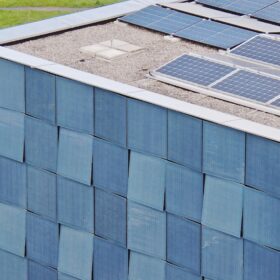
Screen-printed colored glass BIPV modules with sequins-like effect
Swiss retailer Lehner Versand generates 24.5% of its building energy needs thanks to a renovation project that added 109 kW capacity of solar PV to its facade. The PV array has a sequins-like effect, enabled by screen-printed glass modules and a novel curtain wall sub-structure.
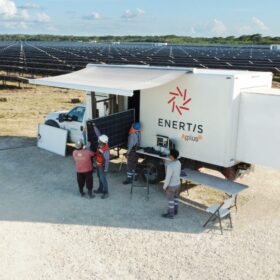
Lab on wheels for on-site solar module testing
Spain-based energy specialist Enertis Applus has introduced a new mobile solar module testing lab to the wider Australian market, following extensive trials at solar farms in New South Wales and Queensland.
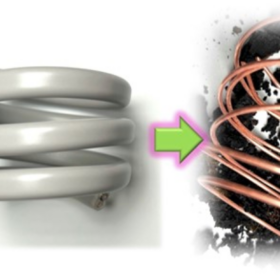
Scientists use microwave radiation to recover copper from old VVF power cables
A Japan-Italy research team say they have developed a simple and convenient method for recovering copper wires from PVC cables that involves the use of microwave radiation and avoids the generation or use of toxic chemicals.
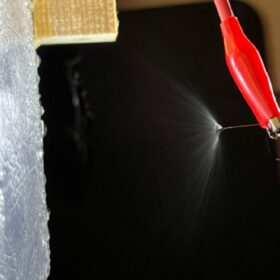
Reducing solar module temperature via electrospray cooling
Scientists in Turkey have sought to use electrospray cooling to reduce the operating temperature of photovoltaic for the first time. They said their experiments offer promising results for the potential application of this technique in real PV systems.
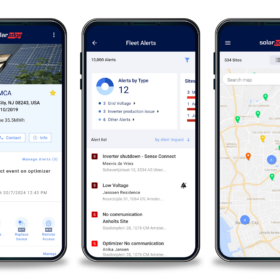
SolarEdge launches mobile app for residential, C&I solar installers
The company’s new mobile app is designed to combine all operations for solar installers, from installations and commissioning to management and servicing, in one streamlined platform.

Utrecht to host vehicle-to-grid car sharing service
Car manufacturer Renault, smart charging solutions provider We Drive Solar and the Netherlands’ leading car sharing platform MyWheels are teaming up to launch a car-sharing service in the city of Utrecht. The vehicles will utilize vehicle-to-grid technology, running on clean energy and feeding power back to the grid during high demand periods.
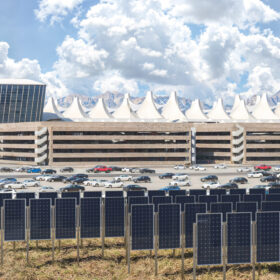
Vertical solar power at U.S. airports
Vertical solar at airports can reduce energy costs, provide a revenue stream and enhance operational efficiency and public image.
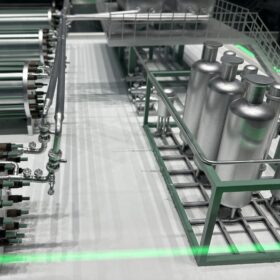
Germany commits €24 billion to build national hydrogen network
KfW Development Bank has offered €24 billion ($25.2 billion) grant to bridge the gap between network operators’ high investment costs and the initially low revenues from network charges.

German researchers investigate molecular solar thermal energy storage
A four-year research project by several German universities is exploring the release of molecules involved in molecular solar thermal (MOST) energy storage. They plan to modify the molecules to achieve the best possible properties for the storage technology.
