
The Hydrogen Stream: Morocco identifies land for green hydrogen
Morocco has presented its new hydrogen strategy, while Uniper and Phillips 66 have announced plans to launch a green hydrogen project in the United Kingdom.

Indian scientists design 26.24%-efficient triple-junction all perovskite solar cell
The researchers simulated an all perovskite solar cell offering the advantage of effectively harnessing sunlight across a wide range of wavelengths. The device has the potential to achieve an open-circuit voltage of 3.76 V, a short-circuit density of 10.70 mA/cm², and a fill factor of 69.00%.
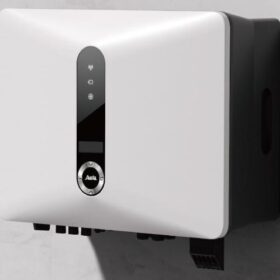
Austa releases new three-phase inverter series
The Chinese manufacturer said its new inverters can support up to 120% three-phase unbalanced output and provide 1.5 times DC overmatching.
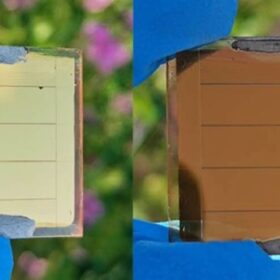
First attempt to build antimony photovoltaic modules
An Italian research team claims a first for solar modules based on air stable lead-free and tin-free antimony-based light absorber, a perovskite-inspired material. The mini modules have a 1.2% power conversion efficiency over a 2.52 cm2 active area.
Stacking algorithm for PV module fault diagnosis
Researchers in Norway have created a PV module fault diagnosis technique based on a stacking algorithm. It utilizes augmented digital images of PV modules collected by unmanned aerial vehicles and is able to detect snail trails, delamination, glass breakages, discoloration, and burn marks.
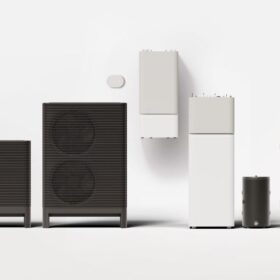
Aira launches new heat pumps for residential buildings
The new heat pumps use propane (R290) as the refrigerant and have a seasonal coefficient of performance of 4.7. The maximum temperature outlet is 70 C and the maximum cooling power spans from 8 kW to 13 kW.

Australia startup offers all-in-one O&M tech to save solar farms millions
A Queensland tech start-up says it has developed an AI-based all-in-one solar farm operation and maintenance system that promises to boost the reliability of solar projects and could save the renewable energy industry $200 million a year.
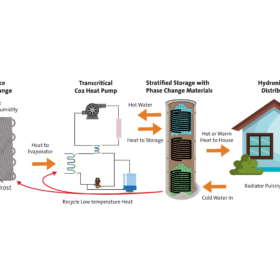
Transcritical CO2 air source heat pump for residential buildings
A research group designed a solar-assisted CO2 heat pump system that can reportedly achieve a lower levelized cost of energy than gas boilers in residential building in the United Kingdom. The system has the potential to achieve a coefficient of 5.1.
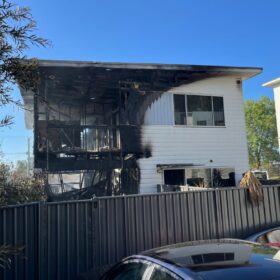
‘Compromised’ battery blamed for fatal house fire in Australia
Fire investigators in the Australian state of New South Wales have determined that a compromised lithium-ion battery was the cause of a recent house fire north of Sydney that killed two people.
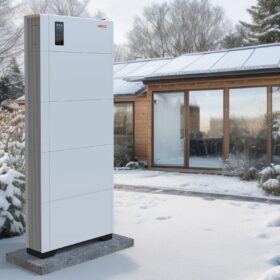
Weco launches new residential battery
The new product has a capacity of 5.4 kWh and is scalable up to 60 kWh. It features a depth of discharge of 100% and a rated charge-discharge voltage of 450 V.
