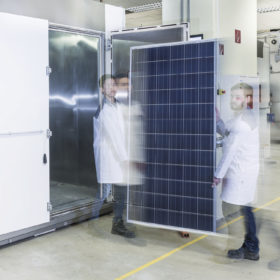
China plans recycling system for wind turbines, solar panels
China will introduce technical standards and policies for the wind and solar industries to recycle their decommissioned equipment by 2030.
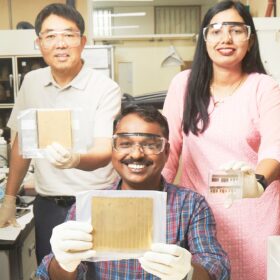
All-inorganic phase heterojunction perovskite solar cell with 21.59% efficiency
An international research team has developed high-efficiency solar cells with a 21.59% efficiency rating by using an all-inorganic phase heterojunction approach. The team used an anti-solvent-free DHA method to produce high-quality, inorganic perovskite thin films, resulting in better device performance under ambient conditions.
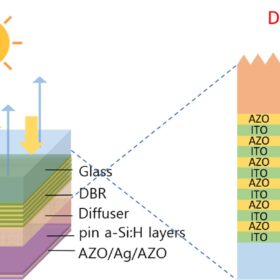
BIPV solar cell based on distributed Bragg reflector electrode
South Korean scientists have developed a new building-integrated photovoltaic (BIPV) solar cell featuring a distributed Bragg reflector (DBR) electrode. This innovation is expected to enhance light scattering and meet aesthetic standards.

ClearVue releases results from first long-term study of clear solar glass
Perth-based ClearVue is making significant strides as its transparent solar windows demonstrate tangible outcomes following a two-year study and published paper.

Wafer formats continue to evolve
Differences in wafer and module specifications, which have bedevilled solar developers in recent years, could now be narrowing.
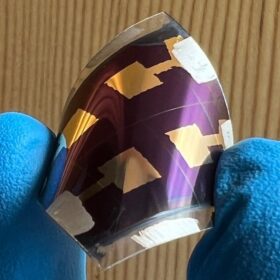
Flexible indoor perovskite solar cell achieves 32.5% efficiency
Italian scientists have developed a flexible indoor perovskite solar cell with 32.5% efficiency. Their design uses a PET substrate combined with a tetrabutylammonium bromide layer over the perovskite absorber. This additional layer effectively reduces defect density and enhances the stability of the underlying 3D perovskite structure.
Novel approach to identify silver shortages in PV industry
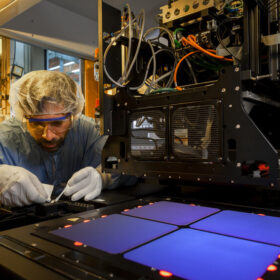
A Dutch-German research team has used a unique method to detect silver shortages in the PV industry. By mapping the silver supply chain from 1995 to 2021, they have identified distinct supply patterns and associated risks.
Advancing circular economy in photovoltaics: The Hot Knife PV module recycling method
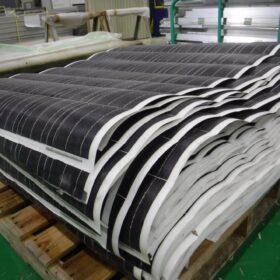
Recycling is of significant importance in a circular economy, yet some challenges have to be faced when recycling PV modules. The novel Hot Knife method to separate the crystalline silicon photovoltaic module front glass from the backsheet contributes only a few permill to the life cycle related potential environmental impacts of PV electricity.
RoboMapper platform for perovskite solar materials
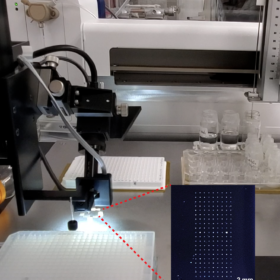
US-based researchers have developed RoboMapper, an automated platform to accelerate the discovery of wide-bandgap metal halide perovskite alloys for next-generation solar cells.

GreenAkku unveils L-base for PV systems on flat rooftops, gardens
GreenAkku says that its 24 kg exposed concrete base for solar arrays enables the installation of PV systems on flat rooftops and in gardens, without the need for additional substructures or drilling.
