
Open-source method to build flexible floating PV systems
A U.S.-Finnish research team has developed an after-market method to adapt commercially available flexible thin-film solar panels for applications in floating PV projects. The special panel design can be applied to three types of floating materials, including neoprene, mincell, and polyethylene.
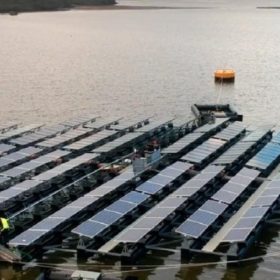
‘Floating PV systems are storm-resistant’
Netherlands-based Floating Solar says its pilot floating PV project at the port of Rotterdam has been able to withstand four severe storms.

Dual-ion battery prototype promises safe and cost-competive energy storage
Scientists have fabricated a working battery using a new type of dual-ion chemistry. The design avoids many of the rare or expensive materials found in today’s lithium-ion batteries, and also comes with an inherently lower risk of fire. The battery showed promising performance, and its creators say they have identified several areas where performance could potentially be improved.
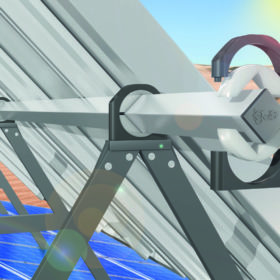
Lubrication-free pedestal bearings to align solar modules
According to the manufacturer, the range of its pedestal bearings for the solar sector has a service life of more than 72 years.

PPA for PV facade in Germany
A 50 kW PV system is being built on the facade of a radiology center near Marburg’s main train station. The Marburg municipal utilities and the Sonneninitiative association have concluded a PPA that ensures the long-term financing of the project.
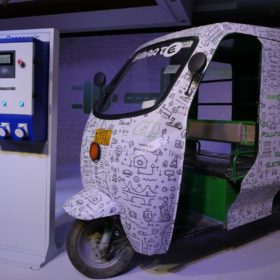
Electric vehicle adoption in India will be led by three-wheelers
Electric vehicles will account for 65-75% of new three-wheeler (3W) sales by 2030. Intra-city transport buses will see 25-40% EV penetration and two-wheelers 25-35%. In four-wheeler passenger vehicles, the market will be driven by shared mobility, while just 10-15% of new car sales for personal mobility will be electric.
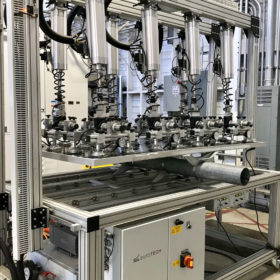
Holistic approaches to reliability
A new report published by the European Technology and Innovation Platform outlines the need for continuing research into the reliability of PV systems and components, and for the collection and sharing of performance data. The report recommends a holistic approach to reliability, going beyond current testing standards to identify new degradation mechanisms, and making use of sensors and drone imaging to monitor systems in the field to prevent and report on system failures.
Toshiba and Next Kraftwerke prepare for Japan’s energy transition
The electronics brand has announced plans for a virtual power plant aggregator JV with German specialist Next Kraftwerke ahead of the opening up of the control reserve market in Japan in April – and the planned switch from clean energy FITs to feed-in premium, top-up payments a year later.
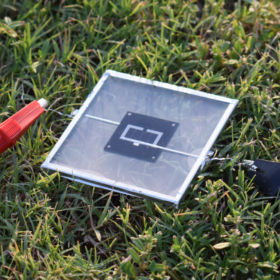
How temperature affects tandem solar cell performance
New outdoor tests conducted at Saudi research center King Abdullah University of Science and Technology (KAUST) have shown that an increase in temperature affects the performance of a tandem perovskite/silicon solar cell not only because of voltage losses but also because of current mismatch between the two sub-cells.
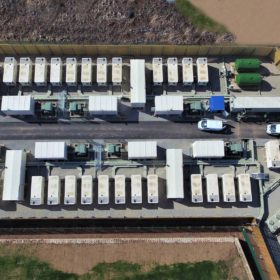
The UK’s biggest balancing act
The nation’s electricity system operator said it wanted more energy storage facilities and to procure new stability products following a big power outage last year. Some 12 months on, the country’s biggest battery storage company has rolled up its sleeves to take on a new role.
