
Australian green hydrogen project secures approval
Green Hydrogen Australia Group has secured approval for three large-scale green hydrogen plants in its pipeline. The Bundaberg Hydrogen Hub, featuring an 80 MW hydrogen electrolyzer, will produce clean hydrogen for vehicle-developer H2X.
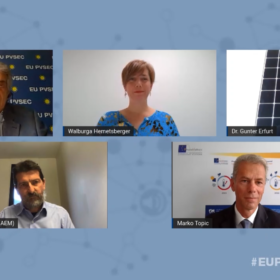
EU PVSEC 2020: Five takeaways
Spread across this week, the 37th EU PVSEC conference brought together companies and research institutes from Europe and further afield. This year’s presentations point to an industry standing at a crossroads. New challenges lie ahead, but there is plenty of optimism surrounding continuing growth and a more central role for PV in energy systems over the next decade. As the conference drew to a close on Friday, pv magazine offers five key takeaways.
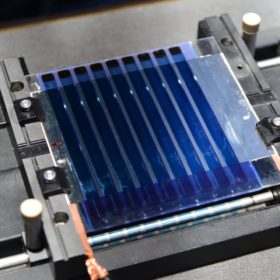
More efficient large-area organic solar cells with spin coating
Researchers in South Korea have used the process to increase performance and the replicability of large-area organic cells. The method was used during film formation to speed up solvent evaporation.

Heating up the heterojunction-LID discussion
Scientists led by the University of New South Wales have looked into the long-term degradation of silicon-heterojunction. Their findings suggest that illumination at high temperatures could actually improve cell efficiency, but also risks activating multiple light-induced degradation mechanisms if not carefully controlled.
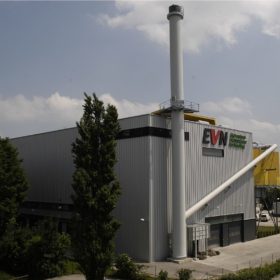
Power-to-heat for district heating may drive wind and solar
Researchers say the technology could help drive clean energy deployment in countries with limited grids or in isolated, coal-based energy systems. According to their model, Kosovo could see a strong increase in wind and PV capacity if power-to-heat is coupled with thermal energy storage for fixed-capacity district heating.
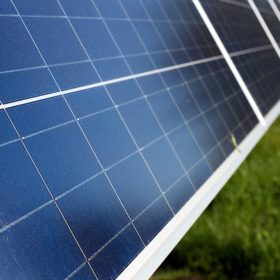
Titanium oxide nanofluid-based cooling technique for PV panels
Indian and Malaysian scientists have developed a new cooling system featuring an assembled back-channel attached on the rear sides of solar panels, to channel flows of titanium oxide and water. They used a 0.6% nanofluid concentration – the optimum value of nanoparticle concentration in water.
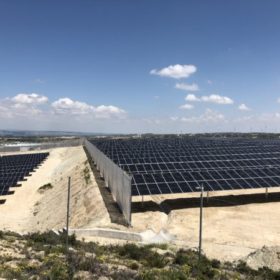
Windbreak walls for solar parks
Iasol has developed a new way to protect solar plants in windy conditions. The Spanish developer said the solution barely has an impact on project costs or output, while preventing expensive damages.

Gambia seeks consultants for 150 MW solar-plus-storage project
The transnational West African Power Pool is seeking consultants for an environmental impact study as well as transaction advisors for a project under development since October.
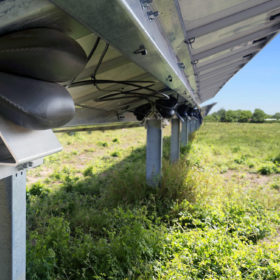
Sunfolding looks to disrupt the tracker industry with air pneumatics
With $32 million in series B funding and an ever-growing project pipeline, air-based tracker startup, Sunfolding, is hoping to increase its hold in the tracker market with tech that’s simple, light and can be installed on terrain previously thought untouchable.

Intense pulsed light processing for 23.0%-efficient silicon heterojunction solar cells
Scientists at Germany’s Fraunhofer Institute for Solar Energy Systems (ISE) have used intense pulsed light (IPL) processing for the development of a busbarless silicon heterojunction solar cell. ILP processing is roll-to-roll technique for rapid thermal processing of various thin films.
