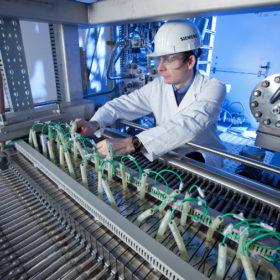
A close look at nature could lead to cheaper hydrogen
Scientists at the Australia National University have observed a key stage in the process of photosynthesis which could be copied to greatly increase the efficiency of sunlight-powered water splitting processes used to produce hydrogen.

The bearable lightness of solar
The weight of a thin-film rooftop PV installation at Netherlands football club AZ Alkmaar has been highlighted in media reports as a possible cause of a stadium roof collapse. However, a full investigation is yet to be launched and one German specialist said studies have shown flush-mount PV panels do not increase static wind loads on rooftops.

Agrivoltaics good for agriculture and panel efficiency
A U.S. research team has found the most efficient locations for agrivoltaics include western America, southern Africa and the Middle East. The researchers found crop land, grasslands and wetlands were the best environments for PV projects linked to agriculture. Conditions suitable for crops are ideal for improving solar module efficiency.
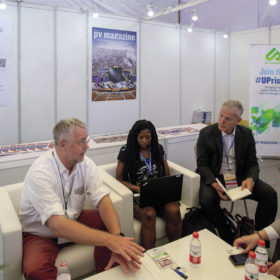
The weekend read: Perovskites step out of the labs
Michael van der Gugten, Sales and Marketing Executive at Smit Thermal Solutions, is convinced that perovskite solar cells have reached maturity, and that they are ready to make the step from the lab to production. He is leading the organization of a conference on this topic and expects that the perovskite community, production equipment suppliers and crystalline silicon cell manufacturers will discuss the implementation of perovskite-silicon tandem cells or the production of standalone perovskite modules.
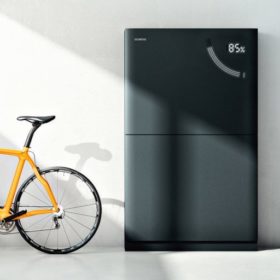
Residential storage in Europe to grow 500% by 2024
A new report from analysts at Wood Mackenzie forecasts 6.6 GWh of residential energy storage to be installed across Europe by 2024. The economics of the technology are at a tipping point, increasingly reaching grid parity in European markets. With rising electricity demand and falling battery system costs, the trend will further spread across the continent and fuel an uptick in demand.
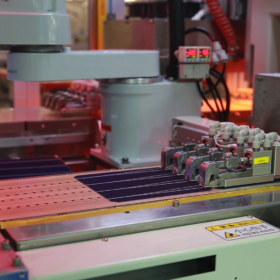
Hanergy sets new efficiency record for heterojunction cell
Chinese thin film producer Hanergy has set a new record of 24.85% module efficiency for silicon heterojunction technology. The record was achieved at the company’s research & development center in Chengdu, China, and has been confirmed by the Institute for Solar Energy Research in Hamelin, Germany.
Oxford PV orders 100 MW production line from Meyer Burger
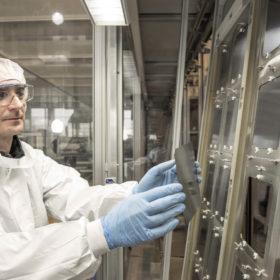
The British-German perovskite startup has ordered a turnkey 100 MW silicon heterojunction solar cell line from the Swiss PV equipment supplier. The terms of the deal were not disclosed.
Indian government invites solar research proposals
The MNRE has invited proposals for high-efficiency perovskite solar cells, solar panel recycling, hybrid inverters and new applications that combine solar and storage, among others.
German-French scientists develop ultra-thin GaAs solar cell with 19.9% efficiency
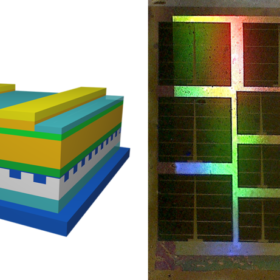
The researchers have developed a new manufacturing process by using an ultra-thin absorbing layer made of 205-nanometer-thick gallium arsenide (GaAs) and a nanostructured back mirror.
Don’t have a node for your solar plant? Connect it to the railway!
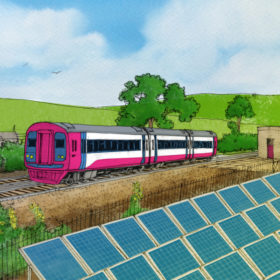
Railway operators can now feasibly connect solar plants to traction substations, claims a consortium that is now working on a similar demonstration project in the U.K. Almost all of the 30 kW installation’s output will be used to move trains, but in the future storage could come into the picture for larger “railway-connected” solar power projects, says 10:10, the U.K.-based climate change charity that developed the pilot.
