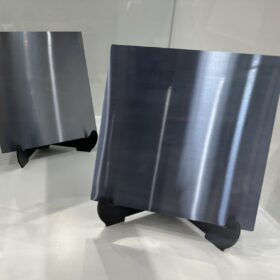
Longi builds 27.25%-efficient back-contact solar cells with high-resistivity wafers
High-resistivity silicon wafers offer superior efficiency potential but are highly sensitive to edge recombination and mechanical damage, limiting their commercial use compared to more robust standard wafers. Researchers from Longi and Sun Yat-sen University demonstrated that integrating in-situ edge passivation unlocks this potential, significantly boosting back-contact solar cell fill factor and efficiency.
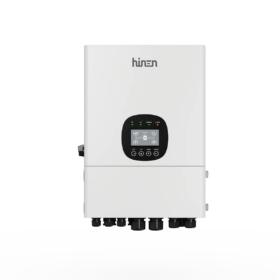
Hinen launches 15 kW three-phase hybrid inverter
The Chinese manufacturer said its 15 kW three-phase low-voltage hybrid inverter is paired with the stackable BP5000 5 kWh battery supporting up to 120 kWh. It features three MPPTs, 150% oversized PV input, and smart load management for optimized self-consumption.
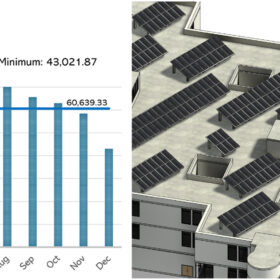
The impact of azimuth angles on PV power production in Saudi Arabia
Researchers in Saudi Arabia conducted a year-long simulation of fixed-tilt PV panels at different azimuth angles, finding that south-facing panels (180°) maximize energy production, while up to 45° eastward shifts cause minimal losses.

The impact of land slope on agrivoltaics feasibility
Brazilian scientists have developed a slope-based framework for agrivoltaics, finding that sites below 15% gradient offer the best balance between agricultural suitability and technical feasibility. Their review of 30 studies shows that steeper terrain can host PV systems with adapted designs, land-use limits, erosion risks, and rising installation costs.

Fraunhofer ISE, PTB report just 0.15% uncertainty in PV module yield measurements
An interlaboratory comparison between the CalLab PV Modules of Fraunhofer Institute for Solar Energy Systems ISE and Physikalisch-Technische Bundesanstalt finds the two organizations deviate by less than 0.15% when measuring the performance of photovoltaic modules. The Fraunhofer team says this is one of the most important indications as to whether their analysis is on the right track.
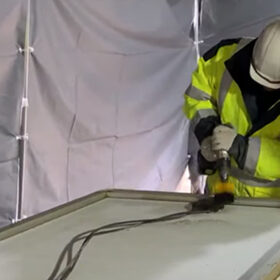
IEC-based technical specifications needed for second-life PV module market
The latest report from the International Energy Agency’s (IEA) Photovoltaic Power Systems Programme (PVPS) says second-life PV modules have the potential to reduce waste and extend the value of solar assets, but their market today remains underdeveloped and requires advances in technical qualifications, scalable reuse infrastructure and supportive policy frameworks.

SALD launches large area sheet-to-sheet tool for perovskite solar pilot lines
The Dutch spatial atomic layer deposition equipment manufacturer has launched a new sheet-to-sheet tool for pilot production of large area perovskite solar devices on glass substrates.
UV testing, solar cell factory inspection now mandatory for Munich Re’s PV warranty insurance
The world’s largest reinsurer has recently introduced stricter requirements for PV warranty insurance to further de-risk insured PV parks and set a higher benchmark for industry wide reliability and production quality.

Agrivoltaics? Yes in my vineyard
Researchers in Spain surveyed 238 wine tourists in the Murcia region and found broad support for trellis-integrated agrivoltaics in vineyards, with 94% backing solar integration and most respondents seeing no landscape conflict.

Comparing safety profiles of lithium-ion, sodium-ion and solid-state batteries
New research finds that battery safety rankings are not universal but highly dependent on application scenarios, and shows that LFP batteries can emit high levels of hydrogen fluoride, challenging their reputation as the “safest” chemistry.
