
Mitrex launches solar PV railing systems
The Canadian building-integrated PV manufacturer has launched semi-transparent and opaque solar PV railing systems for balconies or walkways, for retrofit or new buildings. The products are delivered with support bars, concealed cabling and a choice of mounting systems.

Deye debuts off-grid inverters for residential PV
Deye said its new single-phase off-grid inverters have an AC output power ranging from 3.6 kW to 6 kW. The systems feature a maximum efficiency of 97.6% and a European efficiency rate of 96.5%.
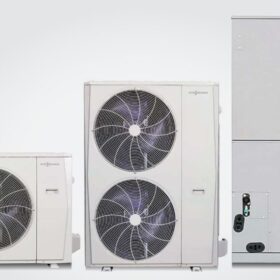
Viessmann unveils ductless air-to-air heat pumps for residential, light commercial applications
The manufacturer claims the new products are particularly suitable for older homes, renovations in extreme climates. All models are said to provide “reliable” cooling and heating at temperatures spanning from -30 C to 50 C.
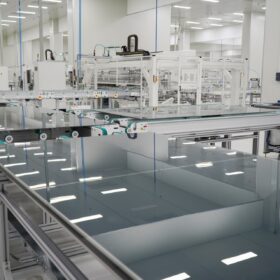
Chinese PV Industry Brief: UtmoLight starts perosvkite module production
UtmoLight says it has launched the world’s first gigawatt-scale perovskite solar module production line at a facility in Wuxi, China. The plant will annually produce 1.8 million panels, with a target of achieving 20% efficiency in mass production by 2025.

Research shows floating PV can reduce lake water temperature by 1.2 C
A before-after-control-impact study conducted at six French lakes for three years has revealed that PV coverage decreases water temperature by 1.2 C on average. The reduction in water temperature also occurred in areas of the lakes that were not covered with modules.
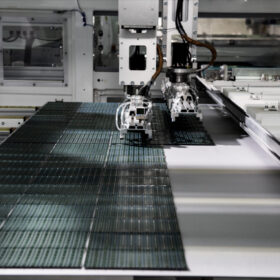
Aiko launches new rooftop solar panels with 24.3% efficiency
Aiko says its 480 W Neostar 2P solar panels, with 24.3% efficiency, are the highest-efficiency residential rooftop PV modules in Australia. The Chinese manufacturer credits its n-type all-back-contact (ABC) cell technology for boosting power output without increasing panel size.
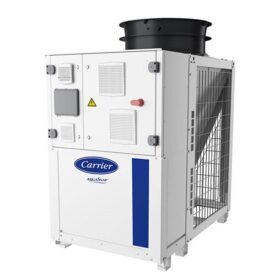
Carrier launches new air-source heat pumps for commercial applications
Carrier, a US-based heating solutions provider, said its new AquaSnap 61AQ heat pump system can deliver high-temperature heating up to 75 C at outdoor temperatures as low as -7 C. The new product is available with capacities ranging from 40 kW to 140 kW.
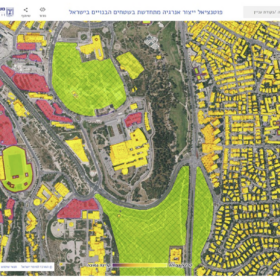
Israel introduces tool to calculate rooftop solar potential
Israel’s Ministry of Energy and Infrastructure, in collaboration with the Israel Mapping Center, has launched a tool that calculates the potential and expected income from rooftop solar installations on residential, industrial, and public buildings.
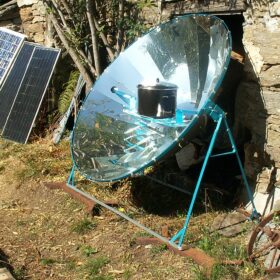
What’s cooking in PV?
Scientists have conducted an analysis of 20 years of academic publications about PV-powered electric cooking and have found interest in the field peaked in 2021-2022 in both developing and developed countries. They have also outlined some potential future developments.
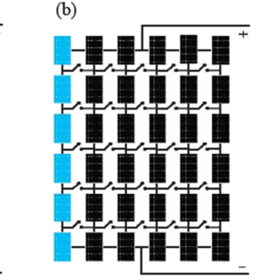
Fuzzy reconfiguration scheme to reduce power losses in PV systems under fault conditions
Scientists in Pakistan have developed a fuzzy reconfiguration method that can reportedly mitigate power losses due to shading and hotspot faults by up to 23.5% compared to conventional techniques. The proposed scheme is said to be suitable for both square and rectangular PV arrays of different sizes.
