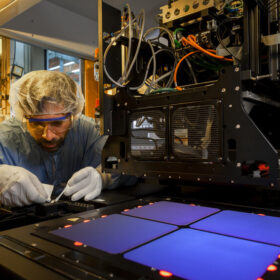
Novel approach to identify silver shortages in PV industry
A Dutch-German research team has used a unique method to detect silver shortages in the PV industry. By mapping the silver supply chain from 1995 to 2021, they have identified distinct supply patterns and associated risks.
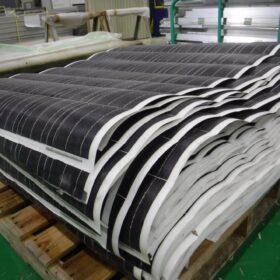
Advancing circular economy in photovoltaics: The Hot Knife PV module recycling method
Recycling is of significant importance in a circular economy, yet some challenges have to be faced when recycling PV modules. The novel Hot Knife method to separate the crystalline silicon photovoltaic module front glass from the backsheet contributes only a few permill to the life cycle related potential environmental impacts of PV electricity.
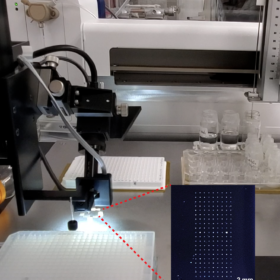
RoboMapper platform for perovskite solar materials
US-based researchers have developed RoboMapper, an automated platform to accelerate the discovery of wide-bandgap metal halide perovskite alloys for next-generation solar cells.

GreenAkku unveils L-base for PV systems on flat rooftops, gardens
GreenAkku says that its 24 kg exposed concrete base for solar arrays enables the installation of PV systems on flat rooftops and in gardens, without the need for additional substructures or drilling.

Combining PV with pumped hydro storage in open-cast coal mines
Indian scientists have suggested building pumped-hydro storage systems connected to solar plants using mines as the lower reservoir and nearby rivers as the upper reservoir. They claim that the proposed combination may reach a levelized cost of energy of $0.2693/kWh.
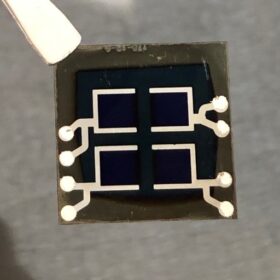
Two-terminal perovskite silicon tandem solar cell with 25.6% efficiency
The Fraunhofer ISE has developed an electro-optically optimized transparent conductive oxide layer that can reportedly improve the efficiency of perovskite-silicon tandem solar cells. A device built with the film achieved remarkable efficiency and fill factor.

Enphase releases solar products optimized for NEM 3.0
The solar microinverter and battery energy storage provider released updates to its product suite to maximize returns under the new net metering rates regime in California.

First Solar explores potential of quantum-dot solar modules
In a joint development effort with UbiQD, thin-film solar manufacturer, First Solar, is exploring the potential use of quantum dots in enhancing solar photovoltaics.
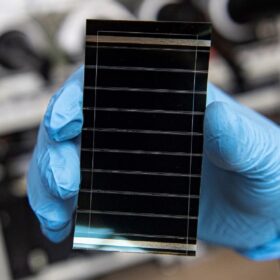
U.S. startup to produce perovskite glass for tandem modules
Caelux secured series A funding to deploy perovskite glass that can be integrated with existing solar manufacturing processes to boost module efficiency.

New study claims PV industry is neglecting overirradiance issues
Overirradiance conditions may affect the operating performance of photovoltaic plants, the stability of the electrical grid, and the efficiency of inverters. A research team has warned these effects are currently not being given proper consideration by the solar industry.
