
German consortium launches web guide for BIPV planning
Germany’s SolarEnvelopeCenter project has launched a web-based planning guide for building-integrated photovoltaics (BIPV), offering standardized design solutions for roofs and facades that comply with building codes and industry standards.
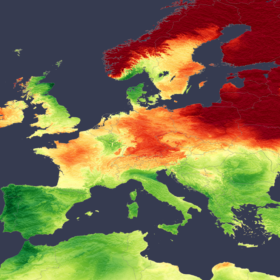
Storm train hits Western Europe PV as East clears under cold
In a new weekly update for pv magazine, Solcast, a DNV company, reports that January 2026 saw Europe’s coldest month since 2010, with Eastern Europe and Scandinavia enjoying above-average solar irradiance under stable, dry air, while the UK, Spain, and Portugal faced record cloudiness and rainfall that sharply reduced PV output.

Sunoyster offers lightweight 440 W glass-covered TOPCon PV panel
Germany-based solar tracker developer Sunoyster Systems has developed a 440 W lightweight solar panel with a tempered glass cover for low-load commercial and industrial roofs.

NexWafe, Talon PV sign 7 GW solar wafer supply agreement
Under the terms of the deal, Germany’s NexWafe will supply its ultrathin solar wafers to Talon PV’s planned 4.8 GW TOPCon solar cell manufacturing plant in Texas. Initial qualification work will take place at a pilot production line at Fraunhofer ISE’s Photovoltaic Technology Evaluation Center.
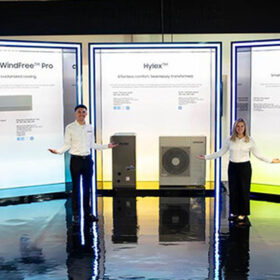
Samsung HVAC unveils inverter-driven residential heat pumps for cold climates
The US-based heating solutions provider said its Hylex inverter-driven heat pump offers 2–5 ton capacity, high efficiency, Wi-Fi control, and reliable cold-climate performance down to –25 C.

How to detect PV system underperformance using only AC-side inverter data
An Australian research team has developed a five-step, rule-based method that detects and classifies underperformance in PV systems using only AC-side inverter data. Validated across more than 1,000 systems, the approach offers a low-cost, low-intervention solution for improving reliability, fault response, and PV system performance.

New single-diode model tackles recombination losses in solar cells
UNSW researchers have developed an intrinsic-adjusted single-diode model that explicitly accounts for radiative and Auger recombination, improving I–V curve accuracy and reducing root mean square error by up to a factor of three. The model is claimed to better predict performance near open-circuit voltage and maximum power point.
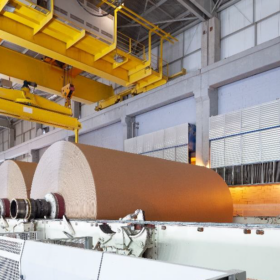
World’s largest steam-producing heat pump comes online in Finland
Turboden, part of Mitsubishi Heavy Industries, has energized what it calls the world’s largest steam-producing heat pump, delivering 12 MWth of superheated steam using low-grade waste heat and CO₂-free electricity with a coefficient of performance 10% above its guaranteed value of 2.

Anti-glare film enables PV system at Brussels Airport
Warehouses De Pauw (WDP) has installed an 8.5 MW solar system at a warehouse near Brussels-Charleroi Airport, equipping roughly 40% of modules with Phytonics anti-glare film to prevent air traffic disruption while maintaining near-full energy output.

Space-based solar could be competitive by 2040, UK government finds
Investment and support could make small-scale space-based solar power (SBSP) viable, with potential for electricity generated in orbit to participate in UK contracts for difference (CfD) scheme according to new report. Launch costs have biggest impact on levelized cost of electricity (LCOE), according to analysis.
