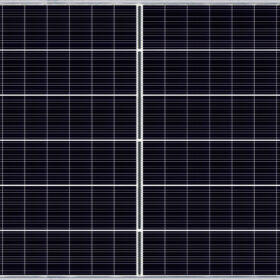
Canadian Solar launches 700 W bifacial TOPCon solar modules
Canadian Solar is offering six versions of its 132-cell TOPBiHiKu7 solar modules, with power outputs ranging from 675 W to 700 W and efficiencies ranging from 21.7% to 22.5%. They have an efficiency range of 26.1% to 27.0%, with a bifacial gain of 20%.
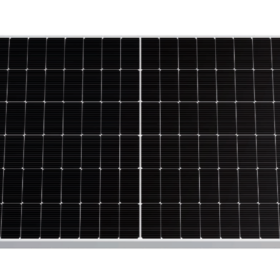
Gautam Solar unveils n-type TOPCon modules at Intersolar Europe
Indian manufacturer Gautam Solar released n-type TOPCon solar modules for the residential, commercial and industrial, and utility-scale PV markets at Intersolar Europe 2023. It is offering the modules in all black, silver frame, glass-to-glass bifacial, and lightweight bifacial variants.

Agrivoltaics for raspberries
BayWa r.e. and its Groenleven subsidiary are building an 8.7 MW agrivoltaics project to support raspberry cultivation, in one the largest projects of its kind in Europe. They expect to complete the project in the first quarter of 2024.

Intersolar 2023: Brand New
pv magazine is on the ground bringing you the latest developments from this year’s three-day European solar shindig in Munich.
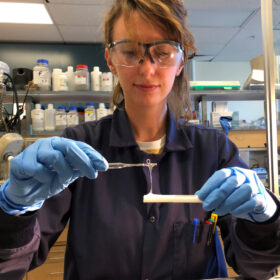
Treatment promises 1000-hour stability for solar perovskites
Scientists in China and Canada have developed an additive that forms covalent bonds with the organic materials in a perovskite solar cell, leading to fewer defects and greatly reduced degradation. Cells treated with the additive maintained 98.6% of their initial performance after 1,000 hours in testing. Xlynx Materials, a company spun out of the University of Victoria in Canada, is making the material available for further commercial trials.

Reducing solar module temperature with acrylic sheets
Jordanian researchers have developed a method using acrylic sheets to reflect and absorb unused solar radiation in PV power generation. The solution has the potential to decrease solar panel temperature by more than 14% and increase power yields by approximately 2%.
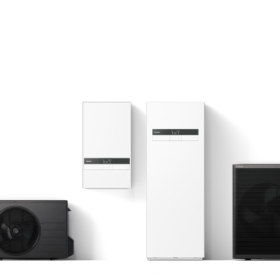
Panasonic releases propane heat pump for residential applications
Japan’s Panasonic has developed an air-source heat pump that uses propane (R290) as the refrigerant. It can produce between 5 kW and 9 kW of heat, as well as domestic hot water up to a temperature of 75 C. It says the heat pump can be paired with rooftop solar to maximize self-consumption. The new Aquarea series also includes a heat pump with R32 as the refrigerant.
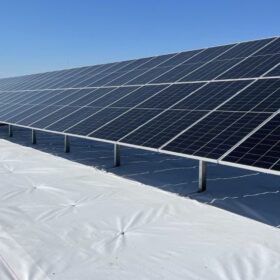
Reflective membrane to increase albedo, energy yield in bifacial PV
Thrace Group has developed a reflective, permeable membrane made of polypropylene resins and coated with a thin white layer that reflects ultraviolet (UV) rays. It claims that the membrane increased the energy yield of a large-scale pilot installation by 4.5%.
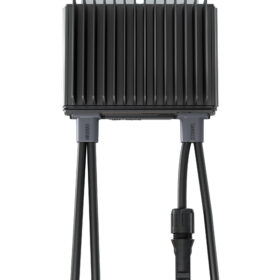
SolarEdge unveils power optimizers for residential, commercial PV
SolarEdge has released new optimizers for residential PV applications with a DC power rating of 500 W, a maximum efficiency of 99.5%, and a weighted efficiency of 98.6%. The optimizer for commercial and industrial applications offers 1.4 kW of rated DC power.
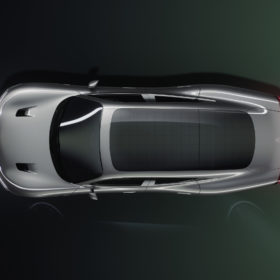
Potential benefits and challenges of PV-powered vehicles
The extent to which PV-powered vehicles contribute to a reduction of CO2 emissions depends on variables such as the carbon intensity of the local grid, driving patterns, and solar irradiation. The market introduction requires technical optimization of the PV, but also of the vehicles.
