
Intersolar Europe day 2: There’s still plenty of buzz here in Munich
Welcome back to the second day of Intersolar Europe! Stay tuned as the pv magazine team brings you the latest solar PV and energy storage news from day 2 of this year’s Intersolar Europe.
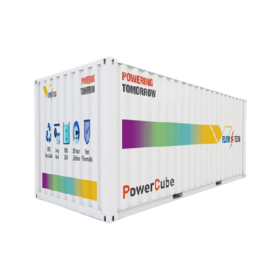
Vanadium redox flow batteries with purported LCOS of $0.10/kWh
Singapore-based VFlowTech has secured funds to scale up manufacturing of its vanadium redox flow batteries. The company currently offers three modular products that can be scaled to multi-megawatt-hour systems.
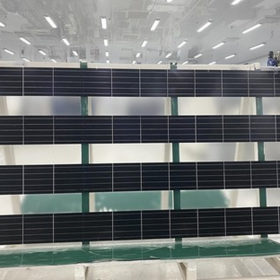
Vietnamese manufacturer unveils PV module for agrivoltaics
Vietnamese manufacturer Irex has announced a new glass-glass solar panel with a power output of 265 W and a power conversion efficiency of 18.1%.

Intersolar Europe Day 1: Hope for Europe’s PV manufacturers
For the first time since 2019, Intersolar Europe has opened its doors. The pv magazine team is delighted to be on the ground in Munich this year to bring you the latest solar PV and energy storage developments, events, and trends from the event, as they happen. Stay tuned for our live updates over the next three days!
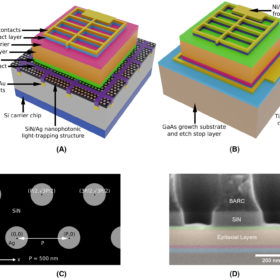
Ultrathin gallium-arsenide solar cell with light management architecture
Scientists led by Cambridge University fabricated an ‘ultrathin’ solar cell, just 80 nanometers thick, using gallium arsenide. The III-V cell achieved 9.08% conversion efficiency, and its developers have demonstrated in simulations that it could reach 16% with further optimization. Given its light weight and intrinsic resistance to radiation, the cell could be suitable to power satellites and other applications in space.
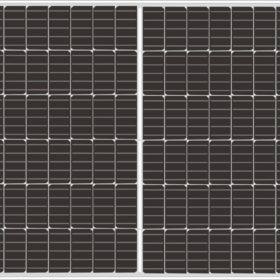
Indian manufacturer unveils 375-410 W half-cut modules with 20.4% efficiency
Pixon Energy has launched mono PERC half-cut-cell modules with output capacities ranging from 375 Wp to 410 Wp. The five-busbar modules can be used in all types of PV installations, including off-grid, residential, commercial and industrial, and utility-scale projects.

Large-scale solar can cool nearby areas
An international team of scientists observed a cooling effect in a large radius around solar arrays. The cooling may have implications for local ecosystem management.
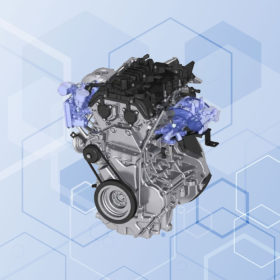
The Hydrogen Stream: A new engine from China and IEA predictions for this decade
Chinese carmaker GAC Group has unveiled an engine it claims improves the mixing process of hydrogen and air. Elsewhere, the IEA has said $7 billion in new electrolyzers will be required globally by the end of the decade, and a British consortium is planning to build green hydrogen production facilities alongside 4 GW of solar, wind, and battery projects it is developing in the United Kingdom.
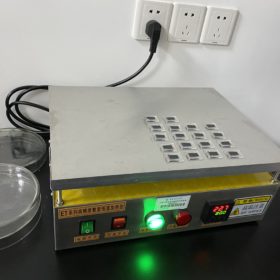
Building perovskite solar cells with waste toner carbon
Scientists in China have fabricated 11.78%-efficient fully printable perovskite solar cells by using an electrode made of waste toner carbon from printer cartridges. The cell achieved an open-circuit voltage of 0.88 V, a short-circuit current density of 24.64 mA cm, and a fill factor of 54.56%.
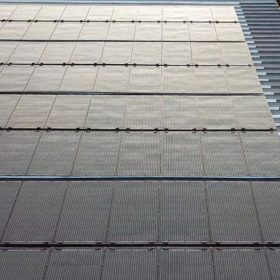
CIGS solar panels for weight-constrained rooftops
U.S. thin-film module manufacturer Sunflare is ramping up production at its factory in China. The company makes four different CIGS modules.
