
Observing silicon anodes in action
Scientists in the United States working with silicon anodes for lithium-ion batteries have managed to model key mechanisms that lead to fast developing performance loss in the anodes. Understanding what causes the silicon to swell up and subsequently fall apart, the scientists say, is an important step to preventing it, and producing long lasting, high-capacity batteries.
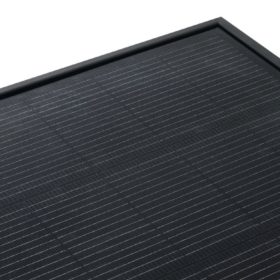
The weekend read: Half-cut solar cells on edge
Half-cut solar cells have quickly grown to become an industry standard, promising more power through reduced cell-to-module losses, among other advantages. Innovative processes have been introduced to reduce cell damage during the actual cutting process, but even these still leave behind an unpassivated area at the edge of the cell, which can result in performance losses. As cell efficiencies increase, this will only become more of a problem. pv magazine examines the possible solutions.
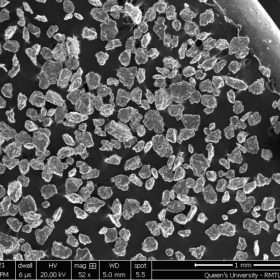
The Hydrogen Stream: New magnesium-based composite for hydrogen storage and a big push from South Korea
Researchers at Canadian Nuclear Laboratories (CNL) identified a new magnesium-based alloy that could be used for hydrogen storage. Furthermore, Hyundai Mobis announced a $1.1 billion (€0.95 billion) investment in two new fuel cell plants in South Korea, while South Korea’s SK Group formed a joint venture with US hydrogen solutions company Plug Power to develop green hydrogen across several Asian countries.
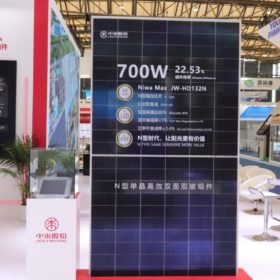
Jolywood unveils 700 W TOPCon PV module
The double-glass product has dimensions of 2,384 x 1,303 x 35 mm and a weight of 38 kg. It is based on the company’s n-type TOPCon 2.0 cell technology dubbed Niwa Max, which the manufacturer said reached efficiencies of up to 25.4% in the laboratory. The module’s efficiency ranges from 21.73 to 22.53%.
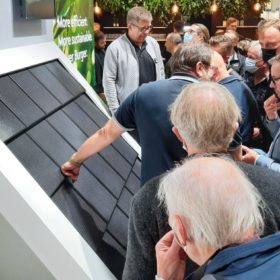
Meyer Burger unveils new solar tiles
Meyer Burger plans to start selling a new building-integrated PV product from 2022. It says the solar tiles have a high energy yield, with simplified installation and the ability to also provide heating. German engineering company paXos designed the tiles.
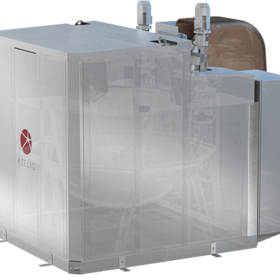
Azelio launches electro-thermal storage system for commercial applications
Developed by Swedish manufacturer Azelio, the system stores renewable energy in recycled aluminum and has an electrical and thermal energy output, with a total efficiency of 90 %. One unit’s storage capacity reaches 165 kWh of electrical output and on top of that thermal energy between 55-65 degrees Celsius. Its modular configuration allows the deployment of projects with a capacity of up to 100 MW.
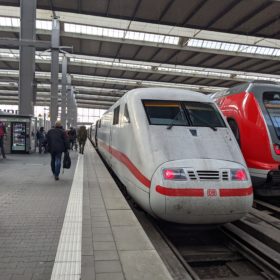
Intersolar Europe day 3: Signing off!
Follow pv magazine live for the final day of Intersolar Europe 2021.
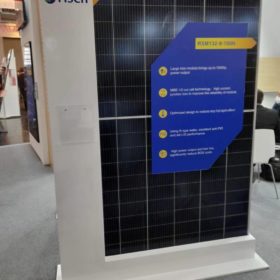
Risen showcases n-type solar panel with output of 700 W
The 210 mm module can reach a power output of up to 703.6 W and a power conversion efficiency of 23.08%. The result was confirmed by Germany’s TÜV SÜD.
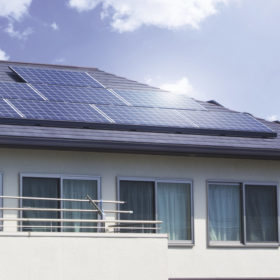
Computer model for residential solar fault detection
Developed by US scientists, the model detects and classifies panel faults without the need for additional sensors. It leverages correlations between the power produced by adjacent panels to detect deviations from a panel’s otherwise expected behavior.

Australian developer steps up plans for 400 MW pumped hydro project
BE Power will continue to progress plans to construct a 400 MW pumped hydro storage project near Toowoomba in southeast Queensland after the local government authority gave the project its tick of approval.
