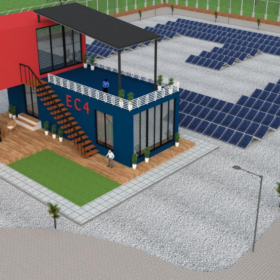
Off-grid data center powered exclusively by PV in Australia
Edge Centres – a data center operator based in Queensland, Australia – has announced its first off-grid, 100% solar-powered facility in the state of Victoria.

Agrivoltaics to protect crops from heavy rainfall
BayWa r.e. and the Fraunhofer Institute for Solar Energy Systems ISE have built a 258 kW agrivoltaic system that hosts apple cultivation under four different crop protection systems. The system utilizes agrivoltaic technology with permanent, light-permeable PV modules that block rain, and tracking PV module tech that blocks rain only if necessary.
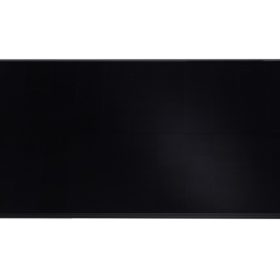
Solaria unveils 430 W pure black residential solar panel
The new residential module of the U.S.-based manufacturer has a power conversion efficiency of 20.40%, a size of 1,076×1,957x35mm, and a weight of 21.3kg. The product is claimed to be compatible with next-generation, module-level power electronics.
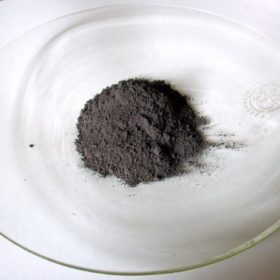
Antimony trisulfide solar cell with 5.84% efficiency
The cell was fabricated by adding a special additive that improves the low crystallinity and high resistivity of the antimony trisulfide film. On top of the improved efficiency, the device showed an open-circuit voltage of 0.62 V, a short-circuit current density of 15.85 mA/cm2 and a fill factor of 59.61%.
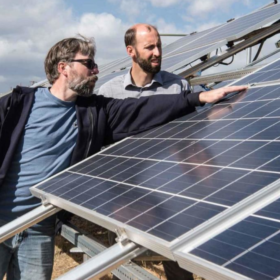
How long do rooftop residential solar panels last?
Multiple factors affect the productive lifespan of a residential solar panel. In the first part of this series, we look at the solar panels themselves.

Keeping track of chlorine in perovskite stability
Scientists in Japan delved deep into the crystalline structure of a perovskite solar cell in order to understand how chlorine helps to improve the cells’ stability. By varying the concentration of chlorine in the material they were able to find an optimal level for increased stability, and open new doors on the way to understanding the specific role of chlorine and the mechanism behind the improvement.
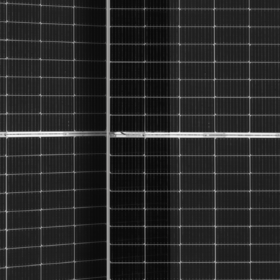
JinkoSolar’s n-type TOPCon cell achieves 24.58% efficiency via hydrogenation treatment
The Chinese manufacturer and the University of New South Wales (UNSW) have improved the average cell efficiency by 0.68% through a post-cell hydrogenation process. The cell’s average open-circuit voltage increased by 7 mV from 696 to 703 mV, and the average fill factor from 82.03% to 83.07%.

Solar in uncommon spaces
With land-use concerns on the rise, large-scale solar projects are increasingly being built on everything from landfill sites to water reservoirs. Here’s an overview of the state of the art.
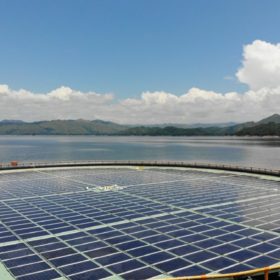
The world’s first large scale hybrid hydro-floating solar power plant
A Norwegian consortium led by Scatec is planning to build a hybrid hydropower-floating PV plant at an unspecified location in West Africa. Building both facilities simultaneously will help its developers define a series of parameters for proper sizing, optimization and design, and set a benchmark for future projects of this kind.
The Hydrogen Stream: An electrolysis test field in Germany and a deal for 500 hydrogen-powered electric trucks
Enertrage and Sunfire want to build an electrolysis test field in eastern Germany and Hyzon Motors sold 500 hydrogen-powered electric trucks to Shanghai Hydrogen HongYun Automotive. Moreover, several partnership agreements were announced in Malaysia, Japan, the US, Australia and South Korea.
