
First Solar to use quantum dots to boost module efficiency
Quantum dot technology promises to boost bifacial solar module output. The company entered into a supply agreement with specialist UbiQD.

Netherlands increasing vigilance on solar inverter-related cybersecurity risks
The Dutch government said it remains vigilant on potential cybersecurity threats coming from solar inverters. It minimized, however, the risk of hidden hardware components in inverters and said these devices would be “easily detectable” by the Dutch authorities.
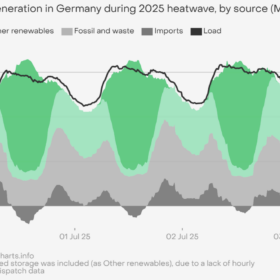
Record EU solar generation helped stabilize power supply during heatwave
A record 45 TWh of solar power was generated across the European Union in June, which helped stabilize electricity supply during the recent heatwave, according to think tank Ember.
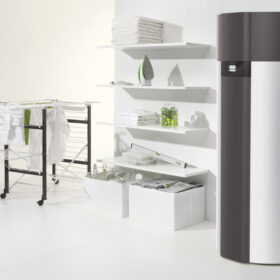
Panasonic launches new domestic hot water heat pump
The Aquarea DHW Heat Pump utilizes propane as the refrigerant and is reportedly able to reach maximum temperatures of 65 C. The standalone unit supports PV contact and is compatible with external recirculation pumps.

Longi unveils 34.58%-efficient tandem perovskite-silicon solar cell based on asymmetric self-assembled monolayer
In a new scientific paper published in nature, the Chinese manufacturer presented a new tandem perovskite-silicon solar cell based on a bottom cell with a heterojunction design. It also used a new type of self-assembled monolayer that reportedly reduces non-radiative recombination and increases cell efficiency.

What standards for agrivoltaics?
The technology which combines solar PV panels and agriculture is gaining ground. IEC Standards for solar photovoltaic (PV) systems already exist, but more might be required, dealing with some of the more specific issues relating to agriculture.
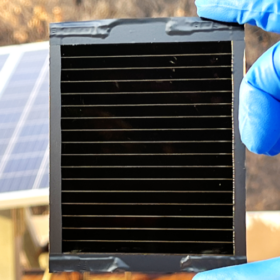
Chinese researchers build 21.60%-efficient perovskite solar modules via blade coating
A research team led by the Dalian Institute of Chemical Physics in China have used tetramethylammonium chloride in the fabrication of perovskite solar cells and modules, demonstrating that it improved both stability and efficiency results. The group’s 10 cm × 8 cm modules achieved certified 21.60% power conversion efficiency. The novel interfacial modification enabled the use of scalable blade coating to deposit both transport layers and the perovskite layer.

Collision of art, culture and solar sets Guinness World Record
A residential building’s vibrant, art-drenched solar façade brought renewable energy to new heights, setting a Guinness Book of World Record for the largest solar panel mural.
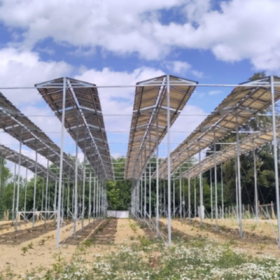
Fraunhofer ISE estimates Germany’s agrivoltaic potential at 500 GW
Fraunhofer Institute for Solar Energy Systems (ISE) says Germany could deploy up to 500 GW of agrivoltaic capacity, based on a nationwide assessment of all agricultural land types and site suitability criteria.
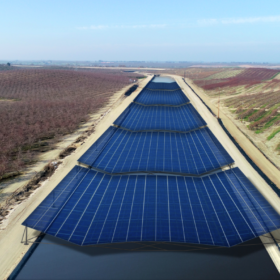
The best tilt angle for canal-mounted PV systems
Researchers in Türkiye have conducted an experimental study on the ideal tilt angles for PV systems deployed on canals. Their analysis showed that an 8◦ tilt angle consistently demonstrates greater performance.
