
Focus on temperature to reduce LCOE, says new study
A new model to assess the role of module temperature in PV power plant economics, developed by scientists in Saudi Arabia, finds that keeping modules cool could be an even more effective strategy to increasing energy yield than pursuing further gains in cell efficiency. The model finds that reducing module temperature by three degrees has a similar impact on energy yield to a 1% increase in conversion efficiency.
New power electronic device to manage surplus solar power–Part II
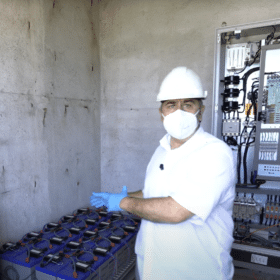
The first pilot tests have been conducted for the EU-funded project ‘renewable penetration levered by efficient low-voltage distribution grids (RESOLvD). pv magazine has looked into the demonstrator and the related energy sharing algorithm.
Hybrid operational strategy to use lithium-ion storage in commercial PV arrays
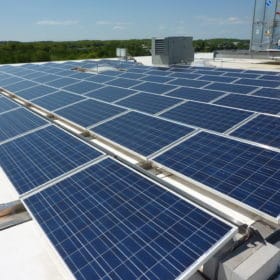
Lithium-ion batteries can not only improve self-consumption in commercial PV systems but are also able to efficiently perform peak shaving and price arbitrage, according to an international research group which has proposed a new strategy to calculate the best system configuration in terms of costs and revenue. The scientists specified, however, that the novel strategy may become effective only if storage system prices will drop under $250/kWh.

Australian government praises vanadium project
The Australian government has recognized TNG’s flagship Mount Peake Project – a mine that includes production plans for vanadium redox flow batteries and green hydrogen – as nationally significant.
Solid-state batteries in space
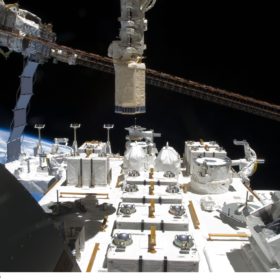
Japanese scientists are about to launch solid-state batteries into space.

A ‘chemical fuse’ – voltage sensitive polymers in the fight against battery fires
A team of researchers from St. Petersburg say they can build a circuit interruptor that works directly into the current collector. The device operates via chemical reactions and would be thus more reliable than current battery monitoring system approaches.
Passive solar module cooling based on hydrogels beads and nanofluids
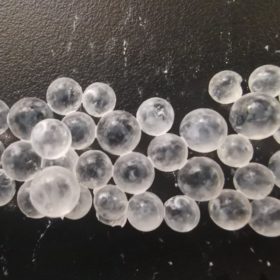
A British-Egyptian research group has tested the use of hydrogels beads for PV module cooling. The micro-sized particles were saturated with aluminium oxide (Al2O3) water-based nanofluids and placed below the simulated PV panels. The experiment showed, according to the scientists, that the hydrogels beads were able to significantly reduce the temperature by between 17.9 and 16.3 degrees Celsius.

Six new ways to boost battery energy density
Scientists in the UK developed a model to explain one of the challenges to harnessing an oxygen-redox reaction in certain cathode materials for lithium-ion batteries. Based on their improved understanding of the reaction, they suggest several possible routes for further research to avoid the unwanted reactions and develop reversible, high energy density cathode materials.
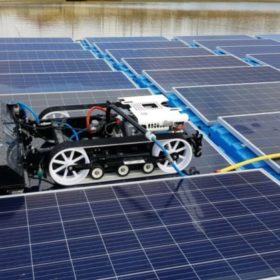
Cleaning robot for floating PV
A cleaning robot optimized for floating PV installations was developed by German manufacturer TG hyLIFT. Also suitable for ground-mount PV, it uses only water without any type of detergent, and is powered by batteries. The robot is now being tested at a floating PV array in Spain.
US government pumps $115 million into clean energy R&D for small businesses
Funds from the latest part of the Biden administration’s Build Back Better pledge will go to grid modernization, carbon removal, renewable energy, and energy storage, among other technologies.
