
Solar key to enable clean cooking in refugee camps
Scientists in Spain studied electricity demand data for the Kobe refugee camp in Ethiopia to optimize several minigrid scenarios, also integrating the use of electric pressure cookers. Their analysis showed that introduction of the cooker required an increase in PV capacity of up 68%.

Fraunhofer ISE developing InP-on-GaAs substrates for III-V solar cells
Fraunhofer ISE researchers say their newly fabricated gallium arsenide substrates (InP-on-GaAs wafers) can replace prime indium phosphide wafers and offer a scalable pathway to lower costs.
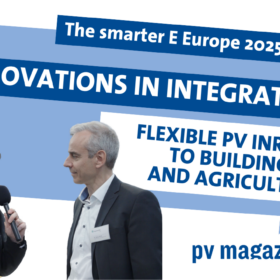
Innovation in building-integrated photovoltaics
At The smarter E Europe 2025, pv magazine Editor Mark Hutchins explored Fraunhofer ISE’s latest integrated PV innovations, including color-customizable flexible modules for buildings, and new agrivoltaic research combining solar with crop cultivation.

The rise of vertical agrivoltaics
Next2Sun AG executives spoke with pv magazine at Intersolar Europe 2025 on the growing momentum of agrivoltaics. The company doubled annual installations to 40 MW in 2024, underscoring vertical PV’s value in markets like Italy, Germany and France.
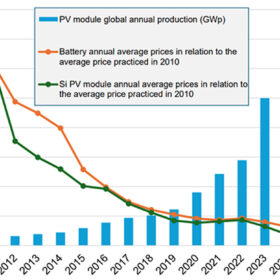
Falling Li-ion battery prices mirror solar photovoltaics trends: Is there a role for second-life batteries before recycling?
Lithium-ion batteries are everywhere, powering everything from consumer electronics to electric vehicles, residential PV storage systems, and, more recently, mitigating curtailment in large-scale wind and solar power plants. EVs are driving large-scale demand for Li-ion batteries which will result in substantial volumes of spent batteries in the near future. This scenario highlights the potential for repurposing EV batteries for second-life stationary applications, which could maximise their value before recycling. However, to fully realise this opportunity, several economic, technical, and regulatory challenges must be addressed and resolved.
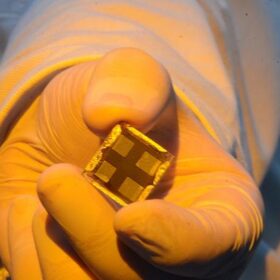
Improving perovskite solar cell durability via formamidinium cations
A team of São Paulo-based researchers have found incorporating formamidinium cations into methylammonium-based lead iodide perovskite films increases the durability of perovskite solar cells when fabricated and measured under ambient conditions.
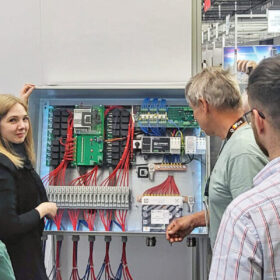
Q3 Energy presents string combiner box with fault detection
Q3 Energie showcased a new string combiner box at Intersolar Europe 2025. The generator junction box can detect and isolate faults in photovoltaic systems.
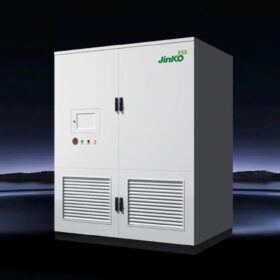
Jinko unveils 520 kWh C&I battery storage system
Jinko ESS has launched a new modular 520 kWh battery energy storage system for commercial and industrial users. The product will be available for global shipment in Q3 2025.
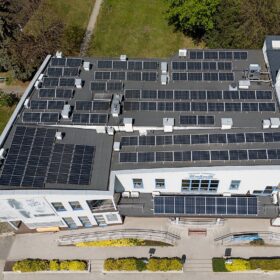
New method to verify warranty conditions of PV modules
Scientists have developed a way to compare the data given by PV manufacturers based on standard test conditions (STC) to the real conditions in the field. The proposed technique is based on the single-diode model and the Newton-Raphson algorithm. The maximum relative error was found to be at 1.37%.
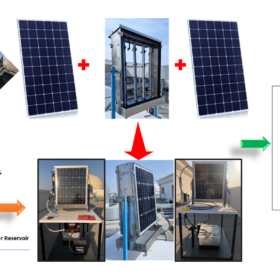
Cooling bifacial PV modules with mist
Scientists have placed mist nozzles inside a bifacial PV module and measured it under an extremely hot climate. The module was found to generate up to 37% more electricity on sunny days and up to 46% more on cloudy days compared to standard monofacial panels.
