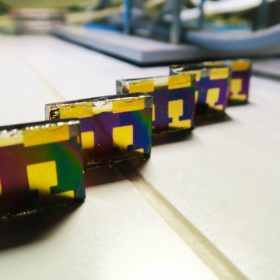
EPFL scientists put perovskite through its paces
Scientists working at Switzerland’s École Polytechnique Fédérale de Lausanne, in the lab of renowned PV scientist Michael Grätzel, have developed a new method for testing perovskite solar cells that they say combines the advantages of laboratory and outdoor testing and will contribute to the creation of industry standards for characterizing perovskite stability.
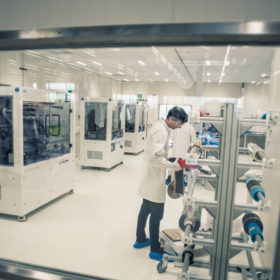
Solid (state) plans announced by imec
Belgian research institute imec this week said it has set a performance record of 400 watt-hours per liter – at a charge rate of 0.5 – for a solid state lithium metal battery. The institute says it is working with the University of Hasselt to scale up production of solid state cells on a pilot line in Belgium.
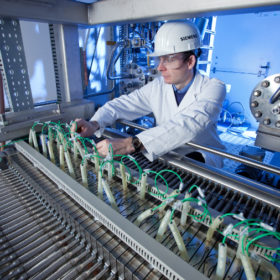
IEA report outlines ‘Future of Hydrogen’
The G20 meeting of environment and energy ministers on the weekend in Karuizawa, Japan, came out largely in favor of adopting lower-emission energy technologies. That means cleaner coal, as well as the development of solar- and wind-powered green hydrogen.
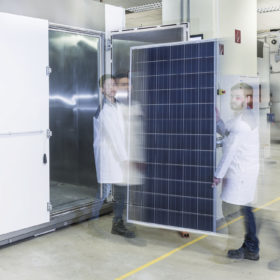
The weekend read: Is PERC still bankable?
Light-induced initial degradation in PERC modules is currently a subject of intense discussion, but tests at PI Berlin have shown that the problem is solvable. Founder and CEO Paul Grunow explains the effects, the approach, and the results.
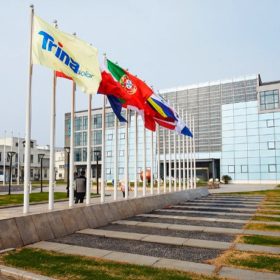
Trina Solar begins mass production of 425 W bifacial glass-glass module
The Chinese PV manufacturer uses TOPCon half cells for the modules. The additional rear side yield is estimated by Trina at 5-30%.
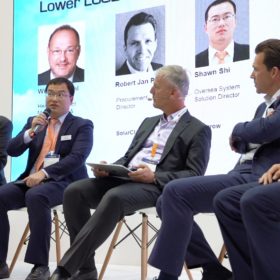
Video: Longi launched the HiMo4 mono-PERC series at Intersolar Europe
Winfried Wahl, head of product management at Longi Solar spoke to pv magazine about how the HiMo4 has a 15% higher power output than the previous iteration in the series.

How to capitalize on the Chinese clean energy juggernaut
Flying in the face of claims the rise of China’s clean energy sector undermines the security of developed nations and harms the profitability of their businesses, a research paper argues such a view is outdated and ill-advised. It presents four opportunities for Western players to tap ‘Green China Inc’.
Green hydrogen airs at G20 meeting of energy ministers this week
Hello hydrogen! A number of factors are floating renewably powered hydrogen to the top of the agenda for worldwide energy ministers. Australia is among the countries most favourably placed to turn hydrogen hype into the biggest source of decarbonized energy the world has yet seen.

MIT works to refine the flow of promising perovskites
Scientists at the Massachusetts Institute of Technology have developed an accelerated process for screening new perovskite compounds as they search for those with the potential to be used in high efficiency solar cells. According to MIT, the process speeds up the synthesis and analysis of new compounds by a factor of ten and has already highlighted two sets of materials worthy of further study.
Five hot PV module and cell takeaways from SNEC
While lacking the swarming crowds of previous years, the 2019 SNEC in Shanghai remained a focal point of the global PV industry when it comes to industrial solar cell and module manufacturing and technology. Here are five hot technology takeaways from the pv magazine team on the show floor and conference sessions.
