
Standardizing smart energy requirements
A systems approach is essential for smart energy standardization, ensuring interoperability, avoiding overlaps, and addressing complex interactions across the grid, appliances, and infrastructures. The IEC System Committee for Smart Energy (SyC SE) applies system-level thinking, using tools like reference architectures and roadmaps to coordinate standards, support innovation, and tackle emerging areas such as EV integration, digital twins, and zero-emission technologies.
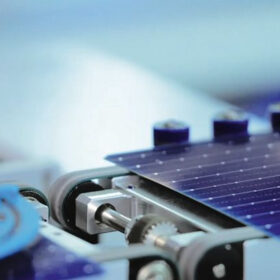
JinkoSolar achieves record-breaking 26.66% efficiency for TOPCon solar cell based on M10-size wafer
The Chinese manufacturer claims the new efficiency result sets a world record for industrial-scale TOPCon solar cells on M10-size wafers. The achievement was verified by an undisclosed independent third-party organization in China.
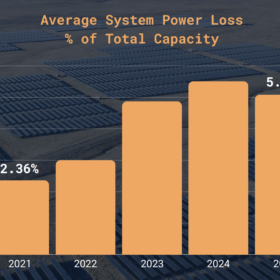
US solar assets lose average $5,070 per MW from power losses
A new report calculates the average power loss of 373 GW of utility-scale and commercial and industrial solar assets in the U.S. at 5.08%, more than double the level five years ago. The power loss average among projects deploying robotics and automation falls to 3%.
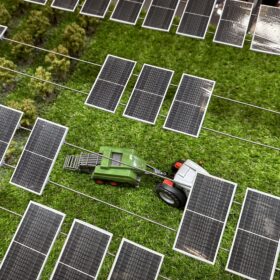
Survey finds 85.8% of Canadians support agrivoltaics
Canadian researchers conducted the first nationwide survey on public attitudes toward agrivoltaics, finding strong support across provinces with 85.8% of respondents in favor, although preferences varied by configuration. Opposition mainly stemmed from resistance to change, aesthetic concerns, and lack of awareness, highlighting the need for public education and updated policy frameworks to enable wider adoption.
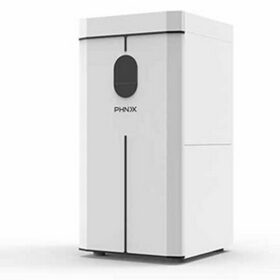
Phnix unveils indoor monobloc heat pump for space‑constrained urban retrofits
The Chinese manufacturer said its new airMono indoor monoblock heat pump is tailored for space‑limited urban retrofits, providing heating, cooling, and domestic hot water without an outdoor unit. The system’s coefficient of performance ranges from 2.5 to 4.1, while the seasonal coefficient of performance spans 4.5 to 4.7.
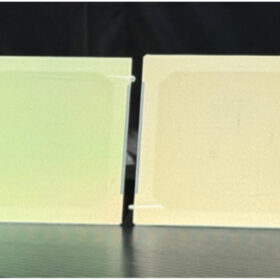
Japanese scientists build near-white heterojunction solar cell for BIPV applications
The lab-scale, near-white heterojunction solar cell uses nanoclay-based scattering layers combined with dielectric multilayer films to preserve power conversion efficiency while enhancing visual appeal. The researchers report optical losses of less than 1% at a 50% clay volume fraction, which are significantly lower than those observed with textured glass.
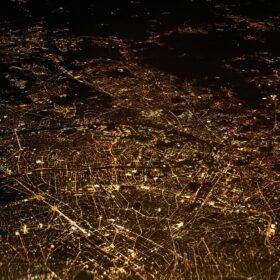
Solar electricity during night-time
Night-time in solar PV systems averages 16 hours, requiring significant storage or alternative generation to meet demand. Pumped hydro and batteries are key, with pumped hydro offering long-duration, low-cost storage for cloudy or windless periods. Complementary strategies include wind power, load shifting, and dispatchable generation, while high solar and wind penetration reshapes grid operations and pricing.
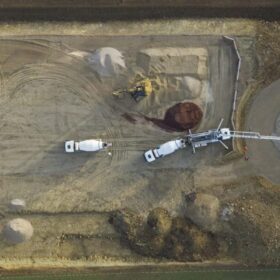
Vattenfall to combine wind and solar with new connection concept
Vattenfall says it will connect a 7.6 MW solar plant to a 17 MW wind farm in Germany, allowing both to operate through a single grid connection point.

‘Garbage in, garbage out’ – solar industry debates reality of AI
Artificial intelligence can accelerate the planning, construction, and operation of photovoltaic systems, as shown at the recent Solar Quality Summit in Barcelona, Spain. But its effectiveness depends on data quality, as poor data, unclear responsibilities, and weak documentation can become major cost drivers.
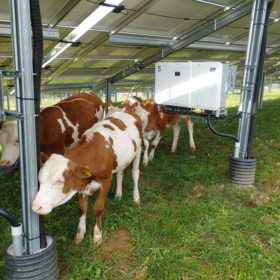
How to protect animals from lightning in agrivoltaics
Researchers in Germany assessed lightning risks in livestock-integrated agrivoltaic systems, identifying key injury mechanisms and establishing safe step and touch voltage limits. Their simulations showed edge strikes and conductive structures pose the highest hazards, highlighting the need for livestock-specific earthing designs and mitigation strategies.
