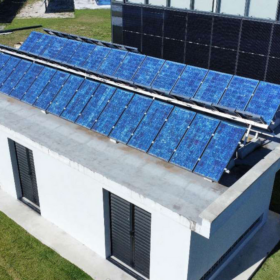
Extensive testing validates reuse of 23-year-old second-life polycrystalline solar modules
Researchers in Brazil tested second-life polycrystalline PV modules for two years and found they retained 87–88% of their original power, with minimal degradation and stable performance. Despite strong sustainability and circular economy benefits, economic incentives remain limited due to the declining cost and short warranties of new state-of-the-art silicon PV modules.
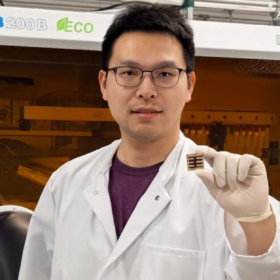
How perovskite solar cells age under temperature stress
German and Swedish researchers have found that rapid temperature cycling degrades perovskite cell performance through thermally induced stress and phase transitions, while also identifying organic spacer molecules that can enhance structural stability.

US startup begins manufacturing grid-scale flywheel ESS
SOSV-backed Qnetic is aiming to raise $20 million in 2026. Over the next two years it will work with the National Lab of the Rockies and other partners on field testing and validating its technology across multiple use cases.
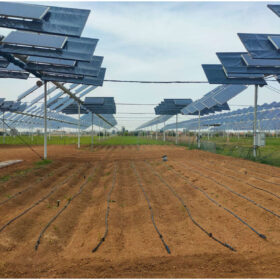
Multi-year field study finds that agrivoltaics can support healthy potato yields
Multi-year field trials conducted in Italy show that agrivoltaic systems can support healthy potato yields without major losses. Strategic shading and dynamic light management during critical growth stages proved key to maintaining productivity.
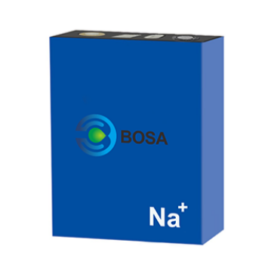
Sodium-ion cells launched for energy storage by another Chinese mid-tier battery company
Bosa Energy in Hubei, China, has launched sodium-ions cells for stationary energy storage, with a volumetric energy density of 206 Wh/L

Pushing perovskite solar cells to the ultimate thickness limit
Researchers in Singapore have developed fully vacuum-processed ultrathin perovskite solar cells with absorber layers as thin as 10 nm, achieving high transparency and stable efficiencies up to 12%. These cells balance optical transparency and electrical performance, offering scalable, design-flexible photovoltaics suitable for seamless integration into buildings.

Tongwei moves into hybrid heterojunction back contact solar cell technology
Tongwei is partnering with GS-Solar and Golden Solar to develop a large-scale manufacturing facility for hybrid heterojunction back-contact (HBC) solar cells that combine heterojunction passivation, tunneling oxide and polysilicon structures used in TOPCon designs, and the grid-free front-side architecture typical of back-contact technologies.
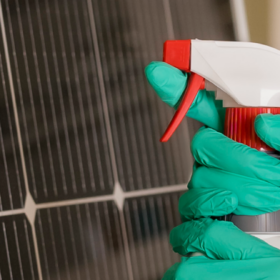
Beware of cleaning photovoltaic panels with dishwashing detergent
Researchers in Finland found that dishwashing liquid reduces solar module transmittance and performance, leaving residues even after rinsing. They recommend avoiding its use for cleaning solar panels.

What are the selling points of marine energy?
Marine energy is renewable and generally predictable. It could thus compensate for the unplanned intermittency of solar and wind generation, its proponents argue. But several challenges still need to be overcome for the energy to become widely used.

Panasonic debuts propane heat pump for light industrial, multi-residential buildings
Designed for commercial and multi-residential buildings, the Aqua‑G EVO heat pump can replace gas boilers, cascade up to eight units, and integrate with Panasonic’s complete HVAC ecosystem.
