
Danish startup launches solar tile for pitched roofs
Solartag has developed a 71 W solar tile with a weight 14.2 kg/m² and a power conversion efficiency of 16%. The new product relies on black PERC cells and is standardized for mass production, according to the manufacturer.
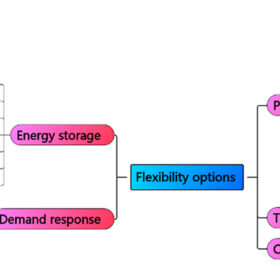
Flexibility options are a central concept for highly renewable energy systems research
To address the variability of renewable energy for a stable supply, 22 distinct types of flexibility options are found in 100% renewable energy systems research articles, categorized into power-to-X, energy storage, demand response, transmission and distribution grids, and curtailment.

Helping the maritime industry to decarbonize
The International Electrotechnical Commission (IEC) highlights the transformative potential of green hydrogen and hydrogen-derived ammonia for decarbonizing the maritime industry. According to its experts, hydrogen could be soon be used as a maritime fuel, as ongoing innovation is slated to make hydrogen storage and transportation more viable over time.
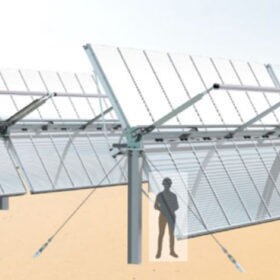
Concentrated solar plant turns to plastic mirrors to power clean heat
South Australia researchers will team with industry partners to build a concentrated solar thermal plant in New South Wales featuring lightweight plastic mirrors that incorporate an aluminium-silica reflective coating to produce industrial heat or electricity.
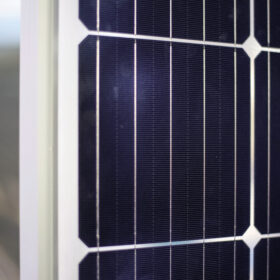
Beyond the hype: Why PERC still powers a stronger solar future
New doesn’t always mean better: Passivated emitter and rear contact solar cells have earned their place through real-world reliability and cost-effective manufacturability.

Battery and battery tech developments in brief from the floor of Intersolar 2025
Europe’s largest solar power event filled 18 very large halls in Munich, and new launches ranged from balcony solar to cow poop innovations.

pv magazine Focus: Manufacturers, installers, scientists discuss EMS
Installers, manufacturers, scientists and users at the Smarter E Europe event – held last week in Munich, Germany – discussed PV home storage, energy management systems (EMS), and key challenges in the implementation of Germany’s new solar provisions.
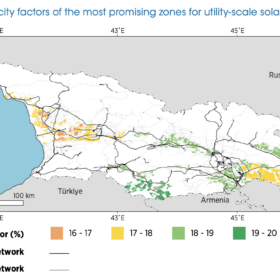
Georgia could host up to 87 GW of solar
The International Renewable Energy Agency (IRENA) says Georgia holds vast potential for solar, with most prime sites for deployment concentrated in the country’s east, based on a recent zoning assessment.

New method to optimize bifacial PV system performance in residential applications
Scientists in Qatar have outlined a new approach to optimize residential bifacial PV systems by combining south-facing and vertically mounted east-facing configurations. The novel methodology reportedly results in a 21.6% increase in a system’s net present value.
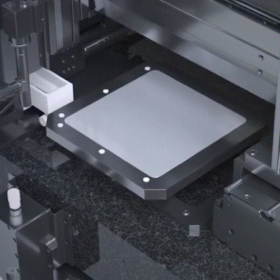
Gosan Tech launching inkjet systems for perovskite solar cells
The South Korean inkjet technology company is expanding to provide inkjet printing systems for perovskite solar photovoltaic manufacturing. An investment by a corporate venture fund backed by Japan’s Epson Group is expected to help it expand the business and widen the applications of its industrial inkjet technology.
