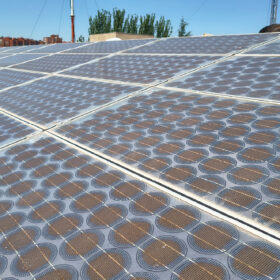
Solar’s living legacy
In early 2021, researchers at a university in Madrid recovered several bifacial PV modules manufactured by Spanish company Isofotón in 1987 that had been operating in different facilities. Following cleaning and characterization, 56 of the modules were installed on a fixed structure at the university, where they have been feeding energy into the grid since May 2021. pv magazine España’s Pilar Sanchez Molina visited the repurposed modules to tell their story.
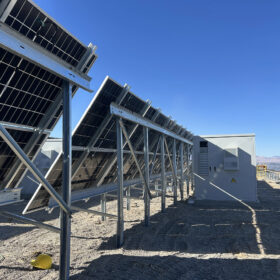
Off-grid and on-site
As the buildout of data centers in the United States accelerates, developers are often targeting remote locations where land availability is high. Off-grid solar paired with batteries offers an opportunity to power data centers in areas that would otherwise not have access to dependable utility infrastructure.
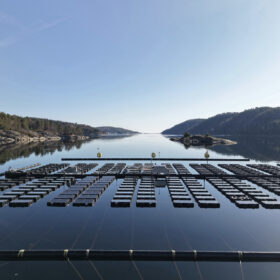
A new wave of floating solar innovators
Offshore floating PV (FPV) is still in its infancy, but an increasing number of inland and nearshore solar installations show there is opportunity to be found on water. From the Netherlands and North Sea to the warm shores of the Mediterranean, Valerie Thompson reports on the innovators in FPV.

Why generative AI is good for grids
Extreme weather events have brought grid resilience into focus in the United States, where hurricanes can wreak havoc on energy infrastructure. During a crisis, quick decisions in the control room are essential – and predicting faults before they occur can prevent major disruption. San Francisco-based AI professional Rudrendu Paul examines how generative AI can improve stability and security, starting with microgrids.
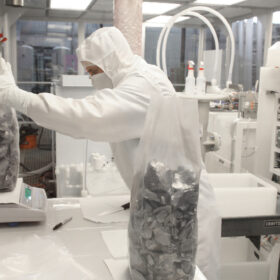
The factors shaping Chinese module prices
Silver price volatility, the return of export value-added tax (VAT) and an abandoned plan to reduce polysilicon manufacturing capacity could all influence PV module prices in 2026. Vincent Shaw reports from Shanghai on the evolving market conditions facing solar module makers in China.
Tackling TOPCon degradation
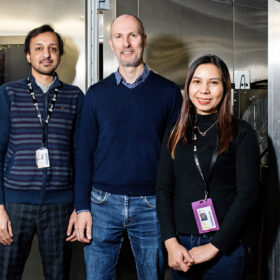
Tunnel oxide passivated contact (TOPCon) modules have achieved incredible market penetration in just a few years. As the industry tackles long-term degradation, scientists continue to identify new failure modes. Near the physical limits of silicon cell technology, even small defects can have major impacts. Researchers are now developing mitigation strategies,
as Lior Kahana reports.

DC state of mind
The race for more computing power per square meter has put solid-state transformers (SST) high on the agenda for AI data center developers, who see full-DC as the system architecture that will maximize efficiency. Dafna Granot, senior manager strategy and innovation at SolarEdge, explains what the switch means and why it matters, as the inverter and energy storage manufacturer prepares to launch its own transformer product in time for the next generation of AI chips.

What’s in an encapsulant?
A review of PV module encapsulant materials by scientists at Austria’s Polymer Competence Center Leoben (PCCL) found that many products on the market are labeled simply as “polyolefin,” with little analysis of their actual composition. As polyolefin’s market share grows, this lack of transparency could make quality issues harder to spot. pv magazine spoke with PCCL scientist Gernot Oreski about the need for transparency in encapsulant contents.
pv magazine test: January 2026 results
George Touloupas, vice president of ESG and new services at Clean Energy Associates, and Huatian Xu, the company’s director of technology and quality, analyze the January 2026 results from the pv magazine test outdoor installations in Yinchuan, China, and Dammam, Saudi Arabia.
pv magazine test: Annual results
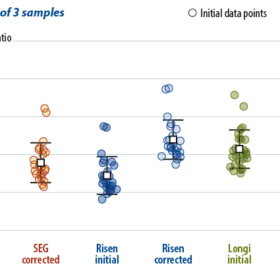
In December 2025, the pv magazine test team conducted a performance analysis of 10 different samples installed at the test field in Yinchuan, China. These 10 modules were installed in December 2024 and January 2025, and had been in continuous operation for nearly a full year. George Touloupas and Huatian Xu of Intertek CEA analyze the results and the role of various degradation modes on long-term PV performance.
