
Brazil falls short of its battery storage potential
The Brazilian Association of Energy Storage Solutions gathered executives to debate applications that could solve systemic challenges facing the Brazilian electricity sector. The issue, they argue, goes beyond a “BESS vs. thermal or renewables vs. energy security” debate, but involves finding the best combination of security, price, ‘renewability’, and flexibility.
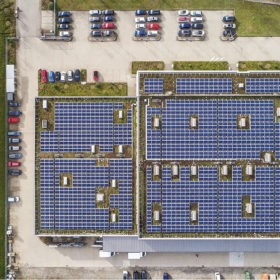
EU understimating rooftop PV power generation
SolarPower Europe estimates that EU solar generation is significantly underreported, with actual PV output projected at 410 TWh in 2025 versus 275 TWh in official statistics. The group attributes the gap to incomplete rooftop PV registration, data transfer delays, and the difficulty of measuring self-consumed solar electricity.
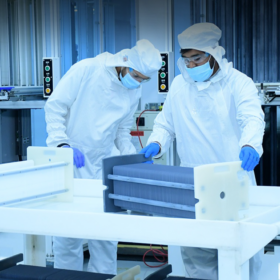
Fujiyama Power to set up 1.2 GW TOPCon solar cell manufacturing facility in India
Fujiyama Power Systems, which currently operates a 1 GW mono PERC solar cell manufacturing facility in Uttar Pradesh, plans to set up an additional 1.2 GW TOPCon solar cell manufacturing facility in Madhya Pradesh as part of its strategy to expand its presence in the on-grid rooftop solar segment.
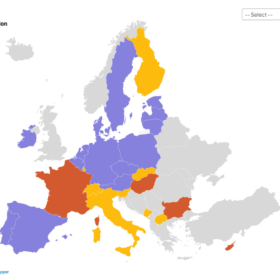
Europe creates map to locate available capacity in power grids
The new pan-European digital platform is designed to enhance transparency and improve access to information on the hosting capacity of European electricity grids, including both transmission and distribution networks.
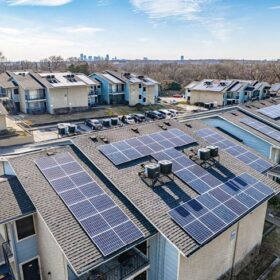
Mandatory utility fees distort price signals for rooftop solar in the US
Regulators in 27 U.S. states are shifting residential electricity pricing toward higher fixed monthly charges and lower usage-based rates, weakening the economics of rooftop solar and home battery systems. This redesign reduces incentives for distributed energy, compresses savings from peak-rate arbitrage, and reinforces reliance on costly centralized grid expansion, potentially raising long-term electricity costs for consumers.
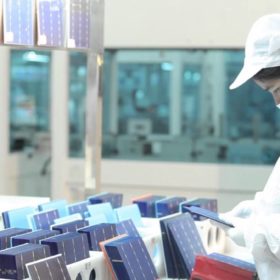
China invalidates First Solar TOPCon patent in major win for JinkoSolar
JinkoSolar has won a key patent invalidation in China against First Solar’s TOPCon-related patent, with the China National Intellectual Property Administration ruling it fully invalid.
EBRD lends €70 million to Slovenian BESS developer across four countries
The European Bank for Reconstruction and Development (EBRD) is backing a five-country merchant battery storage push by Slovenian developer NGEN Energetske Rešitve with a €70 million ($81.3 million) loan supported by an EU first-loss guarantee, in one of the first multi-country merchant BESS portfolios in central Europe.

‘I still remember an HR director guessing my age during a recruitment process and assuming I would soon have children’
This week Women in Solar+ Europe gives voice to Marián Giner, Head of Engineering at Sweden’s Alight. She speaks about systemic barriers, impostor syndrome, and lessons from sport and mentorship to redefine leadership as collaborative, transparent, and team-focused.
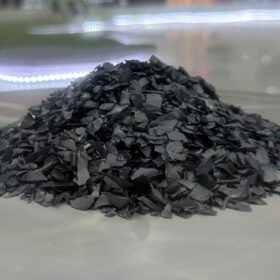
Chinese PV Industry Brief: Polysilicon prices remain flat amid supply-demand rebalancing signals
Polysilicon prices stayed flat in China as production and demand moved closer into balance, easing recent supply–demand pressures.
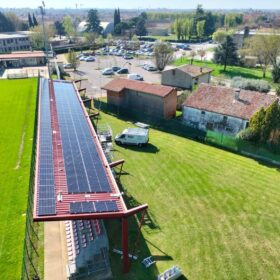
Slovakia plans to develop energy communities
Director of the Slovak Association of Sustainable Energy, Ján Karaba, told pv magazine solar is expected to become one of the key technologies used within future energy communities in Slovakia but said regulatory improvements will be essential to unlock the full potential of decentralized solar energy.
