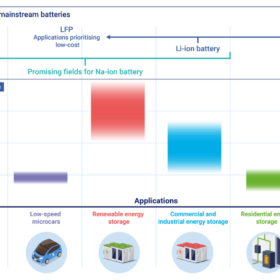
Sodium-ion battery fleet to grow to 10 GWh by 2025
Global demand for sodium-ion batteries is expected to grow to just under 70 GWh in 2033, from 10 GWh in 2025, at a compound annual growth rate (CAGR) of 27%, according to UK-based market research company IDTechEx.
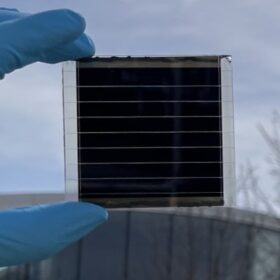
2D/3D perovksite solar cell with record-breaking efficiency of 25.32%
A Chinese-Swiss research group has fabricated a 2D-3D perovskite solar cell with a world-record power conversion efficiency. The cell uses a 2D perovskite layer at the interface between the perovskite and the hole transport layer, which the researchers said can improve charge-carrier transport/extraction while suppressing ion migration.
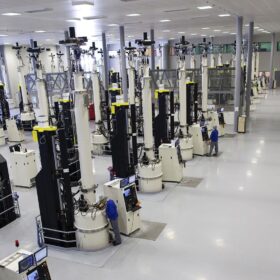
European solar manufacturers secure EU financial support
Norsun and Midsummer have both secured financing to support their capacity expansion plans. Norway’s Norsun plans to raise its polysilicon capacity to 3 GW and Midsummer wants to build a 200 MW module facility in Sweden.
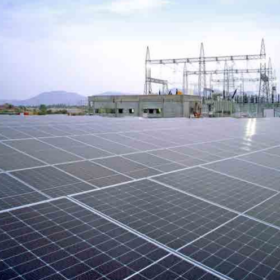
India’s JSW Energy targets 40 GWh/5 GW of storage capacity by 2030
JSW Energy aims to reach 20 GW of power generation, along with 40 GWh/5 GW of energy storage by 2030. It is also investing in solar manufacturing and green hydrogen production.
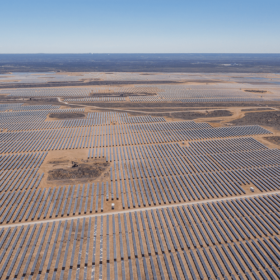
Texas curtailed 9% of solar generation in 2022
Transmission and energy storage limitations in Texas resulted in wasted renewable energy last year.
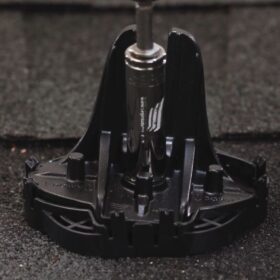
US manufacturer introduces roof mount with integrated sealant
Pegasus Solar has developed the InstaFlash pre-installed sealant for composite shingle roofs.
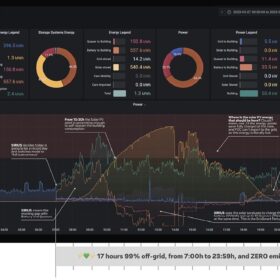
Weekend Read: It’s time to get Sirius
In a bid to avoid costly grid augmentation, Spanish electric vehicle (EV) charger supplier Wallbox has designed a multi-layered energy intelligence solution – proving that necessity is the mother of invention.
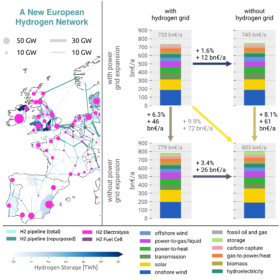
The Hydrogen Stream: Hydrogen grid could cut Europe’s energy costs by 3.4%
German researchers say gas-grid retrofits for hydrogen transport, combined with power grid expansion, could decarbonize Europe’s economy, while S&P says the global ammonia trade could expand by nearly 10 times by 2050.

Chinese PV Industry Brief: CHN Energy plans 1 GW offshore floating PV project
CHN Energy has signed a deal to build 1 GW of offshore floating PV in China’s Shandong province, while JA Solar has announced plans to raise around CNY 9 billion ($1.3 billion) to support capacity expansion.
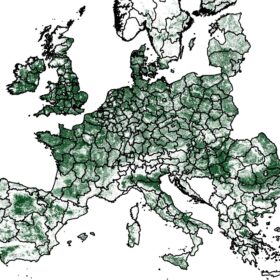
New research identifies potential for 51 TW of agrivoltaics in Europe
Researchers in Denmark have analyzed the potential of PV systems and their influence on the underlying farmland in three different agrivoltaic projects, including vertical bifacial optimal tilted, horizontal single-axis tracking, and vertical bifacial setups. They also calculated the potential for agrivoltaic in every region in the European Union and found that the eligible areas are unevenly distributed.
